

PATRICK STEWART: THE EXTRAORDINARY LIFE AND CAREER OF A STAGE, SCREEN AND TELEVISION LEGEND (1940-2026)

Introduction: A Voice, a Presence, a Legacy
There are actors whose performances entertain us, and there are actors whose work becomes part of the cultural language shared by generations. Sir Patrick Stewart belonged to the latter group. His voice could fill a theater with the force of Shakespeare, command the bridge of a starship, or bring a comic-book mentor to life with warmth and moral authority. Across stage, television, film, animation, and audio performance, Stewart built a career defined by intelligence, discipline, humor, and an unmistakable presence. To audiences around the world he was Captain Jean-Luc Picard of Star Trek: The Next Generation and Professor Charles Xavier of the X-Men films. To theatergoers he was a formidable classical actor whose Shakespearean performances were rooted in years of training and repertory work. To younger viewers he became a familiar voice in animation and comedy, often showing a playful side that contrasted delightfully with his most dignified roles.
Stewart’s story is not simply one of a performer finding fame. It is the story of a working-class boy from Yorkshire who developed his craft through regional theater, joined the Royal Shakespeare Company, and eventually became an international star without abandoning the stage that formed him. His career crossed boundaries that are often kept separate: high classical drama and popular science fiction, prestige television and broad comedy, intimate character studies and enormous franchise storytelling. His death, reported on October 28, 2026, brought renewed attention to the extraordinary range of that work. Marvel Studios subsequently confirmed that his return as Charles Xavier in Avengers: Doomsday would be his final on-screen appearance. The film is scheduled for release on December 18, 2026. This retrospective celebrates the life and work behind that final appearance, while recognizing that Stewart’s legacy is far larger than any one character or franchise.
1. Childhood in Yorkshire: The Making of an Actor
Patrick Stewart was born on July 13, 1940, in Mirfield, West Riding of Yorkshire, England. His upbringing was far removed from the glamorous world that would later surround his name. He grew up in a working-class family, in a community shaped by industry, close relationships, and the practical demands of everyday life. His father, Alfred Stewart, served in the British Army during the Second World War and later worked as a regimental sergeant major; his mother, Gladys, worked in the textile industry. Stewart spoke in later years about the complexity of his childhood and the impact of his family environment. Those experiences informed his understanding of human behavior, authority, vulnerability, and conflict—qualities that would become central to many of his performances.
As a young man, Stewart did not begin with the expectation that he would become an international screen star. He discovered acting through school and local theater, and the stage offered a place where language, imagination, and discipline could become a vocation. He left school as a teenager and pursued work while continuing to develop his interest in performance. His early path was not a straight line toward celebrity; it was a practical apprenticeship in the craft. He learned to project his voice, understand a text, listen to fellow performers, and build a character through repetition and preparation. These fundamentals would remain visible throughout his career, whether he was delivering Shakespeare, leading a television ensemble, or voicing an animated character.
The Yorkshire roots remained part of Stewart’s identity even after decades of international recognition. His speaking voice became famous for its clarity and authority, but the actor behind it retained a connection to the communities and experiences that shaped him. The contrast between humble beginnings and a career of extraordinary reach is one of the defining elements of his story.
2. Training, Repertory Work and the Road to the Stage
Stewart’s early professional years were shaped by the demanding world of British repertory theater. He trained at the Bristol Old Vic Theatre School and worked with touring and repertory companies, gaining experience in a wide range of plays and roles. Repertory work required stamina and flexibility: actors might move rapidly from one production to another, learn new material, and perform before audiences with different expectations. It was an education that rewarded preparation rather than celebrity. Stewart learned how to make a role specific, how to sustain a performance over repeated nights, and how to respect the architecture of a play.
Before international fame, he worked across regional stages including Lincoln, Sheffield, Manchester, Liverpool, and Bristol. These years mattered because they gave him a broad foundation. Classical texts taught him how to handle heightened language; contemporary drama required emotional precision; touring work taught him how to communicate clearly in a room where every seat mattered. The craft was physical as well as intellectual. An actor had to understand rhythm, breath, movement, timing, and the relationship between voice and space. Stewart developed a reputation as a serious and reliable performer, qualities that would later make him an important member of one of Britain’s most respected classical companies.
His Broadway debut came in Peter Brook’s production of A Midsummer Night’s Dream in 1971. The experience introduced him to American theater audiences and widened the professional horizon of an actor whose reputation had been built largely in Britain. Yet the stage remained his artistic home. Even when film and television schedules became demanding, Stewart returned to theater, often choosing challenging roles that tested his technique and allowed him to engage directly with an audience.
3. The Royal Shakespeare Company: A Classical Foundation
In 1966 Stewart joined the Royal Shakespeare Company, beginning an association that would last 27 years and include more than 40 productions. The RSC was central to his artistic development. It placed him among actors, directors, and designers devoted to exploring Shakespeare and other major dramatists, and it gave him opportunities to play a wide range of characters. He appeared in productions that demanded command of verse, emotional range, and a deep understanding of theatrical structure. His work included roles in Shakespearean drama and plays by other writers, allowing him to develop a repertoire rather than become identified with one type of character.
Stewart’s classical training is audible in his screen work. He understands how a sentence is built, where an idea turns, and how a pause can carry meaning. He can make exposition feel like thought rather than information, a skill that proved especially valuable in science fiction, where characters often have to explain unfamiliar worlds. His Shakespearean background also gave him a way to approach authority. A king, a starship captain, a professor, and a political leader may inhabit different fictional universes, but each must persuade others to believe in the weight of responsibility. Stewart brought that sense of duty and consequence to many of his best-known performances.
The RSC years were not merely a stepping-stone to television fame. They were a major achievement in their own right. The company’s tribute after his death recalled his 27-year association and the breadth of his work. For audiences who knew him primarily as Picard or Xavier, this history offers a fuller picture: before he became a global screen icon, Stewart was already a respected classical actor whose reputation had been earned through decades of demanding stage work.
4. Shakespeare, the National Theatre and Broadway
Stewart’s relationship with Shakespeare continued throughout his career. He played leading roles in productions that required both intellectual rigor and emotional openness, and he became known for performances that made classical language feel immediate. His work included major Shakespearean roles such as Leontes in The Winter’s Tale and appearances in productions of Henry IV. He also performed in works beyond Shakespeare, including modern drama and plays by writers such as Harold Pinter and Edward Albee. These choices demonstrated that his interests were never limited to one period or style.
His stage career included work at the National Theatre, the Young Vic, and on Broadway. In A Life in the Theatre, he appeared alongside Joshua Jackson in a production that explored the relationship between an experienced actor and a younger colleague. In The Master Builder, he took on the demanding title role in Henrik Ibsen’s drama. His performance as George in Who’s Afraid of Virginia Woolf? demonstrated his ability to inhabit contemporary psychological conflict as convincingly as he could inhabit a Shakespearean world. He also became associated with A Christmas Carol, performing a celebrated one-man version in which he portrayed multiple characters, relying on vocal transformation and imagination rather than elaborate staging.
Theater gave Stewart a continuing artistic challenge after his television fame had made him recognizable everywhere. It also kept him connected to the immediacy of performance. Unlike a film set, where scenes are assembled through editing, theater asks an actor to sustain a complete emotional journey in real time. Stewart’s return to the stage was a reminder that he never regarded acting as a finished accomplishment. It was a practice that demanded continued curiosity and work.
5. Early Television: Building a Screen Career
Before Star Trek transformed his public profile, Stewart had already accumulated substantial television experience. British television offered him roles in literary adaptations, historical dramas, mysteries, and serious contemporary stories. Among the productions associated with his early screen career were I, Claudius, Tinker Tailor Soldier Spy, Smiley’s People, The Devil’s Disciple, Oedipus Rex, Miss Julie, and other BBC and television dramas. These performances allowed him to bring the discipline of the stage to the camera, where a small shift in expression could communicate what a theater actor might convey through gesture and projection.
His television work during this period showed his range. He could play figures of power, men caught in political or personal danger, and characters whose intelligence concealed emotional turmoil. He was especially effective in stories that depended on language and moral ambiguity. The camera rewarded the control he had developed on stage, but it also required restraint. A screen performance is often built from close-ups, fragments, and subtle reactions. Stewart learned to adapt without losing the clarity that made his stage work distinctive.
His role as Captain Ahab in the television adaptation of Moby-Dick brought him further recognition and demonstrated his capacity to carry a large dramatic production. He also appeared in productions such as Hamlet, where he played Claudius and the Ghost in a televised adaptation. These projects helped establish him as an actor who could lead serious television drama, long before science fiction made him a household name. They also formed an important bridge between his classical career and the global audience that would soon discover him.
6. The Role That Changed Everything: Captain Jean-Luc Picard
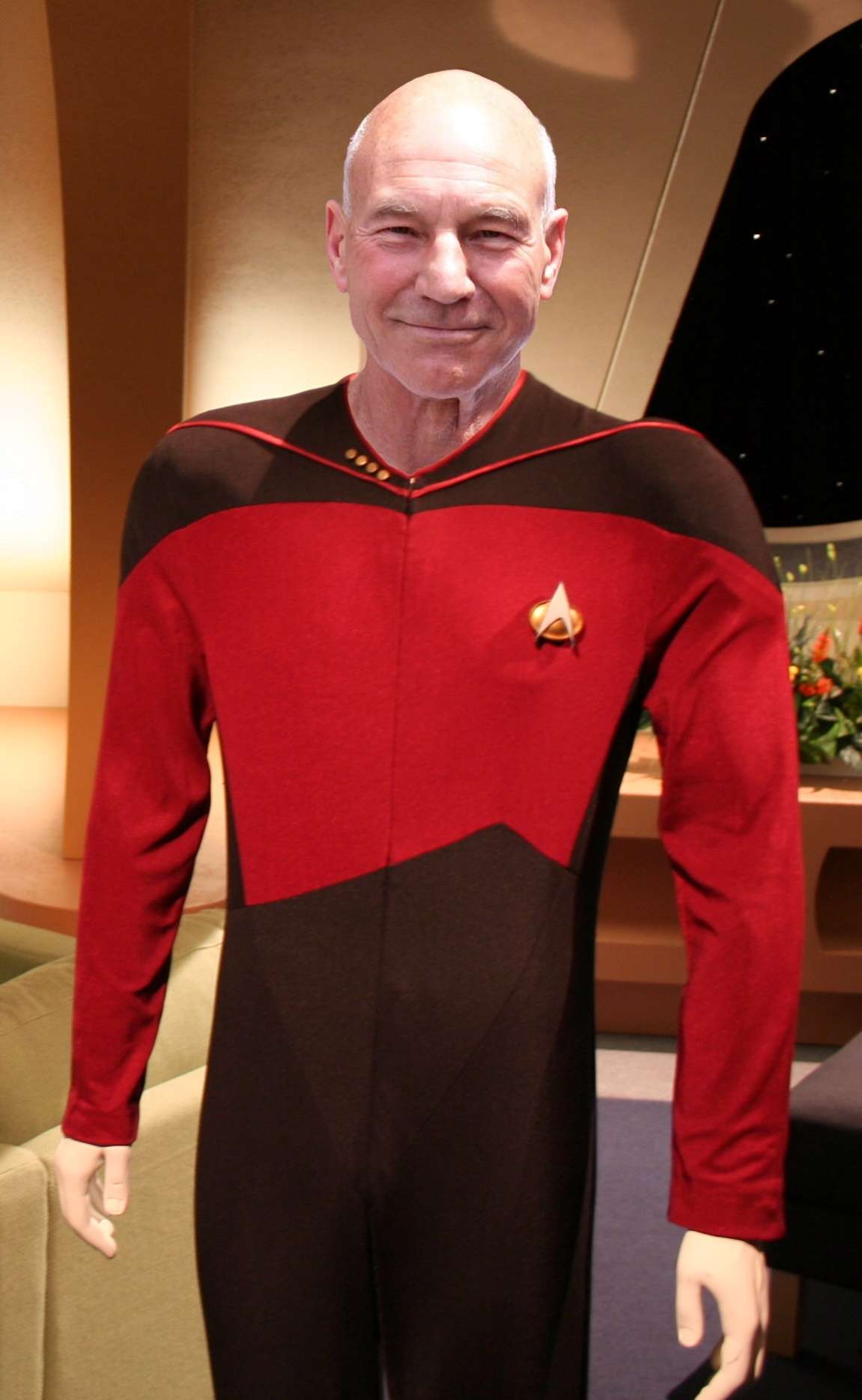
In 1987 Stewart was cast as Captain Jean-Luc Picard in Star Trek: The Next Generation. The decision would define a major chapter of his life and help reshape the public image of the Star Trek franchise. At first, the role was an unexpected departure for an actor known for classical theater. Science fiction television was not necessarily viewed as the destination for a Shakespearean performer, and Stewart initially approached the project as a professional commitment rather than a prediction of lasting fame. The series quickly demonstrated that Picard could be a character of unusual depth: thoughtful, principled, curious, and capable of both command and compassion.
Picard was different from the swashbuckling image of a traditional television hero. He often preferred diplomacy to force, reason to impulse, and dialogue to combat. He was a leader who understood that command brought obligations, not simply privileges. Stewart played him as a man whose authority came from judgment and integrity. His Picard could be stern, but he was also capable of warmth, embarrassment, humor, and profound grief. The performance helped make the captain a model of thoughtful leadership for viewers who wanted science fiction to explore ethical and philosophical questions.
Star Trek: The Next Generation ran for seven seasons, from 1987 to 1994, and became one of the most influential science fiction television series of its era. Stewart appeared in every episode as the central figure of the Enterprise-D crew and helped anchor an ensemble that included Jonathan Frakes, Brent Spiner, LeVar Burton, Michael Dorn, Gates McFadden, Marina Sirtis, and Wil Wheaton. The show’s success gave Stewart an international following and established Picard as one of television’s defining characters. His classical training helped the series approach complex ideas with seriousness, while his natural authority made its futuristic command structure believable.
7. Picard’s Moral Universe and Star Trek’s Cultural Impact
The significance of Picard extended beyond the adventures of the Enterprise. Star Trek: The Next Generation used its future setting to examine diplomacy, prejudice, artificial intelligence, war, personal identity, and the responsibilities of technological progress. Picard frequently stood at the center of those debates. He was not written as an infallible figure; he could be wrong, wounded, uncertain, and challenged by events. But he was expected to think carefully and act according to principles. Stewart gave those expectations emotional credibility.
Episodes such as The Measure of a Man, which examined whether the android Data should be regarded as a person with rights, remain important examples of the series’ philosophical ambitions. Stewart’s courtroom performance made the issue more than an abstract debate. He argued for the dignity of a being who was not human but who demonstrated individuality, memory, and the desire to grow. Other stories explored the cost of leadership, the scars of conflict, and the possibility of understanding people whose cultures or values were unfamiliar. The series invited audiences to imagine a future in which cooperation and knowledge could overcome fear.
Picard also became a cultural reference point. His measured delivery, thoughtful pauses, and famous command to make it so entered popular conversation. The character inspired generations of viewers, including people who found in him an example of intellectual leadership. Stewart’s portrayal helped prove that a science fiction protagonist did not need to rely on constant physical action to be compelling. A thoughtful conversation, a moral dilemma, or a carefully delivered speech could be as dramatic as a battle in space. That achievement is one of the reasons Picard remains central to the history of television science fiction.
8. The Star Trek Feature Films
Stewart carried Picard from television into the cinema, beginning with Star Trek Generations in 1994. The film brought the Next Generation cast into the theatrical franchise and placed Picard alongside Captain James T. Kirk, played by William Shatner. It explored legacy, loss, and the passage of time, themes that suited Stewart’s increasingly reflective interpretation of the character. The film was followed by Star Trek: First Contact in 1996, widely remembered for its action, emotional intensity, and the confrontation between Picard and the Borg.
First Contact gave Stewart some of his most powerful material as Picard. The captain’s experience of assimilation by the Borg had left psychological wounds, and the film explored the difference between justified resistance and consuming vengeance. Stewart played the character’s anger as something frightening precisely because it emerged from a man usually associated with restraint. The story deepened Picard rather than simply repeating the television formula. Star Trek: Insurrection followed in 1998, while Star Trek: Nemesis arrived in 2002. Each film placed the Enterprise crew in a new moral and physical challenge, while allowing Stewart to continue developing the captain.
For a time, Nemesis seemed to provide a final chapter for Picard. The character’s later return in Star Trek: Picard would show how much more remained to be explored. Across the films, Stewart gave the franchise a consistent emotional center. The films also demonstrated that a television character could become a durable cinematic figure without losing the qualities that had made audiences care about him in the first place.
9. From Space to Superheroes: Becoming Professor Charles Xavier
In 2000 Stewart entered another major popular franchise when he portrayed Professor Charles Xavier in X-Men. The casting brought together a classically trained British actor and a character who had become one of the most important figures in Marvel’s mutant mythology. Xavier is a telepath, educator, and founder of a school for young mutants. He believes that people with extraordinary abilities can live alongside humanity and that fear should not determine the future. Stewart approached him with the same qualities that had made Picard memorable: intelligence, patience, moral seriousness, and a quiet but unmistakable authority.
The role required a different emotional register. Xavier was not a starship captain responsible for a crew; he was a mentor trying to protect young people whose powers made them targets of suspicion. His friendship and ideological conflict with Magneto, played by Ian McKellen, gave the films a powerful dramatic foundation. Both men had experienced persecution, but they reached different conclusions about how mutants should survive. Stewart and McKellen made the conflict personal and philosophical, turning what might have been a simple superhero confrontation into a debate about history, fear, power, and coexistence.
Stewart reprised Xavier in X2: X-Men United, X-Men: The Last Stand, X-Men Origins: Wolverine, The Wolverine, X-Men: Days of Future Past, and Logan, as well as appearing in Doctor Strange in the Multiverse of Madness. The character’s journey changed across the films, from confident teacher to an older man facing the consequences of time, violence, and loss. Logan, in particular, gave Stewart a deeply affecting opportunity to portray Xavier’s vulnerability. The performance showed that a character associated with wisdom could also be fragile, funny, confused, and in need of care.
10. The X-Men Films and the Meaning of Difference
The X-Men stories have long used superhero mythology to explore social exclusion, prejudice, identity, and the fear of people perceived as different. Xavier’s dream of peaceful coexistence placed him at the center of those themes. Stewart’s performance helped communicate the character’s belief that education and empathy could change society. He did not play Xavier as naïve; he understood the danger mutants faced and the pain that discrimination could produce. His hope was an active choice, sustained through difficult circumstances.
The relationship between Xavier and Magneto became one of the franchise’s richest dramatic elements. Magneto believed that human hostility made peaceful integration impossible, while Xavier maintained that a different future could be built through cooperation. Their friendship made the disagreement more compelling because neither man was simply a symbol. Stewart and McKellen brought affection, history, and regret to their scenes together. The performances suggested that political and moral disagreements can be most painful when they divide people who once trusted one another.
The films reached audiences at a time when superhero cinema was evolving into a dominant force in global entertainment. Stewart’s presence connected the new genre to a tradition of serious character acting. He helped show that a comic-book adaptation could address social questions while delivering spectacle. For many viewers, Professor X became inseparable from Stewart’s face and voice. His interpretation gave the character an enduring screen identity and helped make the X-Men films influential in the broader development of modern superhero storytelling.
11. Logan: A Different and Devastating Xavier
Logan, released in 2017, offered one of the most striking reinterpretations of Professor Xavier. Set in a bleak future, the film presented an older Xavier whose health and memory had deteriorated. The once-commanding mentor was now vulnerable and dependent on Logan, played by Hugh Jackman. Stewart embraced the character’s frailty without reducing him to a symbol of decline. He found humor, tenderness, impatience, confusion, and flashes of the brilliant mind that had once guided the X-Men. The performance was moving because it allowed the audience to see the person beneath the legend.
The film’s emotional power came partly from the contrast between Xavier’s past and present. He had spent a lifetime trying to protect young mutants and build a better world. Now he faced the consequences of age and a violent history that could not be undone. Stewart made the character’s moments of lucidity feel precious. His work also demonstrated that superhero stories could accommodate intimate drama and difficult questions about caregiving, responsibility, mortality, and memory. Logan was not simply a farewell to a familiar character; it was a mature examination of what happens when heroes grow old.
The performance earned widespread critical praise and introduced Stewart’s Xavier to viewers who might not have followed every earlier X-Men film. It also reinforced the actor’s ability to find new dimensions in a character he had played for nearly two decades. Rather than repeating familiar gestures, he allowed the role to evolve. Logan remains one of the defining performances of his screen career and an example of how genre storytelling can create space for deeply human work.
12. Comedy, Animation and Voice Acting
Stewart’s public image was often associated with gravitas, but his comic timing was equally distinctive. He appeared in comedy projects that played with his dignified persona, allowing audiences to enjoy the contrast between the serious actor and the absurd situations around him. His work in Extras, where he appeared as an exaggerated version of himself, demonstrated a willingness to laugh at celebrity and at the expectations created by his most famous roles. He also appeared in comedy films and television projects that drew on his precise delivery and expressive reactions.
His voice work introduced him to audiences who might never have seen him on stage. Stewart voiced Avery Bullock on American Dad!, a character whose bureaucratic authority and eccentric behavior provided a comic counterpoint to Picard. He also contributed to animated series, films, documentaries, and audio projects. His voice was an instrument in its own right: resonant, controlled, articulate, and capable of shifting from warmth to menace. The same qualities that made him effective in Shakespeare and Star Trek made him a natural choice for narration and voice acting.
Stewart’s ability to move between drama and comedy is an important part of his legacy. He did not allow audiences to confine him to a single image. He could be a wise mentor in one project, a stern official in another, and a ridiculous comic figure in the next. The willingness to play against type made his career richer and helped reveal the humor that had always existed beneath his formal public persona.
13. Film Career Beyond the Franchises
Although Star Trek and X-Men became the most recognizable pillars of Stewart’s screen career, his filmography extended well beyond those franchises. He appeared in a variety of genres, including historical drama, thriller, comedy, fantasy, action, and family entertainment. His film credits include Excalibur, Dune, Lady Jane, L.A. Story, Robin Hood: Men in Tights, Conspiracy Theory, Masterminds, Jeffrey, Safe House, The Pagemaster, Jimmy Neutron: Boy Genius, Chicken Little, Gnomeo & Juliet, and several other productions. These projects showed that he could contribute to ensemble casts, lead dramatic stories, and bring personality to supporting roles.
In Excalibur, he appeared in John Boorman’s mythic retelling of the Arthurian legend. In Dune, he played Gurney Halleck in David Lynch’s adaptation of Frank Herbert’s science-fiction novel. Those early genre films anticipated the fantasy and science-fiction work that would later define his popular reputation. Comedy roles such as Robin Hood: Men in Tights allowed him to use his authority for comic effect, while dramatic films gave him opportunities to portray men whose confidence concealed uncertainty or moral conflict.
Stewart’s film career was never limited to the size of a role. He could make a brief appearance memorable through precision and presence. His performances often suggested a larger life beyond the immediate scene. That quality helped him become a valued collaborator across very different productions. The franchises made him famous, but the wider filmography shows an actor who continued to seek variety and challenge.
14. Television After Star Trek: Miniseries, Guest Roles and Picard
Stewart continued to work in television after The Next Generation concluded. He appeared in acclaimed adaptations and miniseries, including Moby-Dick and Hamlet, and received Emmy recognition for his work. He also appeared in television comedy and drama, including Extras and other guest roles. His television career included projects for British and American audiences, reflecting the international reach he had developed through Star Trek. His appearances were often distinctive even when they were brief, because he brought a clear sense of character and purpose to each performance.
In 2020 he returned to Jean-Luc Picard in Star Trek: Picard. The series was not simply a continuation of the old show. It examined an older man living with the consequences of decisions, losses, and changes in the galaxy. The first season confronted questions about synthetic life and the rights of artificial beings, echoing themes that had been central to The Next Generation. Later seasons brought back familiar characters and explored Picard’s relationships, family history, and personal legacy. The series ran for three seasons and gave Stewart an opportunity to revisit the role with the perspective of age.
Picard was especially meaningful because it allowed Stewart to portray the character beyond the period of command that had first made him famous. The captain had become an elder figure, but not one without doubts or unfinished business. Stewart’s performance connected the new series to the original while acknowledging that time changes people. The return also demonstrated the enduring audience relationship with Picard: viewers wanted not only another adventure, but a chance to understand what the character had become.
15. Awards, Honors and Recognition
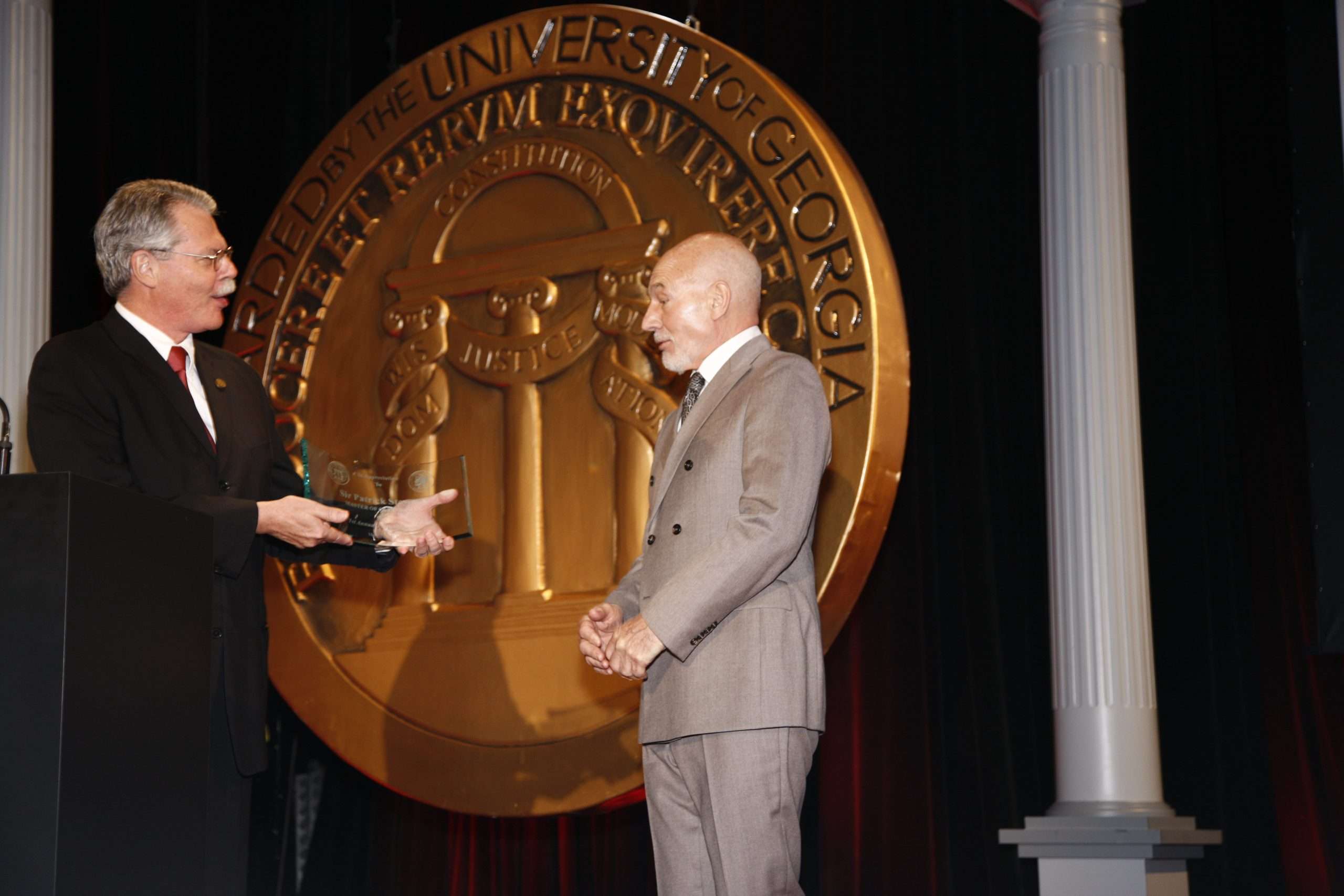
Stewart’s career received recognition across theater, television, film, and recording. His honors included multiple Laurence Olivier Awards and a Grammy Award, as well as nominations for major awards such as the Tony, Emmy, and Golden Globe. He received honorary degrees and other distinctions recognizing both his artistic contribution and his influence as a performer. He was knighted in 2010 for services to drama, formally becoming Sir Patrick Stewart. The honor reflected a career that had become significant not only in popular entertainment but also in British cultural life.
Awards can never fully measure an actor’s influence. Stewart’s most important recognition came from the audiences who followed him from Shakespeare to Star Trek, from the X-Men films to his later stage appearances. His work connected people who might otherwise have little in common: science-fiction fans, theater audiences, comic-book readers, students of Shakespeare, and viewers of television comedy. He became a rare performer whose name could attract attention across different cultural communities.
His professional reputation was also shaped by the respect of fellow actors and collaborators. Tributes following his death described him as a singular talent, a generous colleague, and a performer whose humanity was visible in his work. The range of those tributes reflected the range of his career. He had worked with generations of performers, directors, writers, and production teams, leaving an impression in both major productions and smaller collaborations.
16. Personal Life, Advocacy and the Person Behind the Roles
Stewart’s public life included family, friendships, advocacy, and a willingness to speak about issues that mattered to him. He was married to singer and songwriter Sunny Ozell, and he had children from his earlier marriage. He spoke publicly about personal experiences and social causes, including domestic violence, drawing attention to the importance of support and awareness. His advocacy was informed by a belief that public figures could use their visibility to encourage conversation and action.
He also became associated with educational and charitable work. His connection to the arts was not confined to performance; he supported theater, learning, and the development of young artists. His work with institutions and students reflected the value he placed on training and opportunity. The actor who had benefited from repertory theater and classical education understood that artistic careers depend on access, mentorship, and the chance to learn through practice.
Stewart’s sense of humor was frequently visible in interviews and public appearances. Despite playing characters known for seriousness, he could be mischievous and self-deprecating. The gap between the commanding voice audiences recognized and the playful person they encountered in interviews became part of his appeal. His career was built on discipline, but it was sustained by curiosity and a willingness to keep trying new things.
17. His Final Chapter and Avengers: Doomsday
In the final years of his career, Stewart continued to work and to speak about acting as a lifelong vocation. In a 2026 interview, he reflected that roles could become less available as actors grew older, but he said he continued to welcome interesting offers and could not imagine officially retiring. That statement captured the spirit of a performer who had never treated acting as a temporary occupation. He remained open to challenge and continued to engage with characters that had accompanied him for decades.
Stewart’s return as Professor Charles Xavier in Marvel’s Avengers: Doomsday now carries a special significance. Following news of his death on October 28, 2026, Marvel Studios confirmed in its tribute that the film would be his final on-screen appearance. The studio praised the grace, intelligence, and humanity he brought to Xavier across more than 25 years. The film is scheduled to open in theaters on December 18, 2026. Stewart’s return reunites him with a role that began with the first X-Men film in 2000 and became one of the defining superhero performances of the modern era.
The news gives the film an emotional dimension for audiences who have followed his work. It is important, however, to distinguish what is confirmed from what remains unknown before release: Marvel has identified the appearance as his final on-screen performance, but the full story details and the precise scale of Xavier’s role belong to the film itself. What is already clear is that Stewart’s final screen chapter returns to a character whose values—education, compassion, dignity, and the possibility of coexistence—echo many of the qualities audiences admired in the actor himself.
18. Death, Tributes and an Enduring Legacy
Sir Patrick Stewart’s death was reported on October 28, 2026, at the age of 86. News of his passing prompted tributes from colleagues, institutions, studios, and fans around the world. The Royal Shakespeare Company remembered an artist whose association with the company spanned 27 years and more than 40 productions. Marvel Studios paid tribute to the performer who had brought Professor Charles Xavier to life for generations of moviegoers. Co-stars from Star Trek and X-Men reflected on his talent, generosity, friendship, and influence. The responses came from different corners of the entertainment world because Stewart’s career had reached so many different audiences.
His legacy cannot be reduced to a list of awards or credits, though the list is substantial. It lives in the image of Picard choosing diplomacy over violence, in Xavier teaching young mutants that difference need not mean isolation, and in the Shakespearean actor who could make a centuries-old line feel newly spoken. It lives in performances that encouraged viewers to value intelligence, empathy, and moral courage. It also lives in the humor of a performer who understood the absurdity of celebrity and was willing to play with the public’s expectations.
Stewart helped change popular culture by demonstrating that genre entertainment could be intellectually ambitious and emotionally sophisticated. He brought classical technique into science fiction and superhero cinema without making those worlds feel less accessible. He gave audiences two enduring characters whose influence extends beyond their original stories. And he showed that a long career can be built not on repeating one success, but on remaining curious, disciplined, and willing to begin again. His final appearance in Avengers: Doomsday will provide one last screen encounter with Professor X, but the work that made Patrick Stewart a legend will continue to be discovered by new generations.
Selected Filmography: Feature Films
Stewart’s film work spans many decades and genres. The following selection highlights major screen credits and franchise appearances; it is not intended as a complete archival filmography. Feature films include: Hennessy (1975); Excalibur (1981); Dune (1984); Lifeforce (1985); Lady Jane (1986); The Doctor and the Devils (1985); L.A. Story (1991); Robin Hood: Men in Tights (1993); Gunmen (1993); Star Trek Generations (1994); Jeffrey (1995); Conspiracy Theory (1997); Masterminds (1997); Star Trek: First Contact (1996); Star Trek: Insurrection (1998); X-Men (2000); The Pagemaster (1994, voice); Star Trek: Nemesis (2002); X2: X-Men United (2003); X-Men: The Last Stand (2006); TMNT (2007, voice); X-Men Origins: Wolverine (2009); Gnomeo & Juliet (2011, voice); The Wolverine (2013); X-Men: Days of Future Past (2014); Green Room (2015); Logan (2017); The Emoji Movie (2017, voice); The Kid Who Would Be King (2019); Charlie’s Angels (2019); Dragon Rider (2020, voice); and Doctor Strange in the Multiverse of Madness (2022). His final announced screen appearance is Avengers: Doomsday (2026), as Professor Charles Xavier.
The titles above illustrate the range of his film work, from literary and historical material to science fiction, comedy, animation, and superhero drama. Release dates and credit listings can vary by territory and by whether a project is counted as a feature, television film, voice performance, or archival appearance. A definitive filmography should therefore be checked against a specialist film database and the relevant production credits.
Selected Television and Streaming Work
Stewart’s television credits include: The Fall of Eagles (1974); I, Claudius (1976); Tinker Tailor Soldier Spy (1979); Smiley’s People (1982); The Devil’s Disciple (1980); The Voyage of Charles Darwin (1978); The Secret of NIMH-related television voice work and other narration projects; Star Trek: The Next Generation (1987–1994); Star Trek: Deep Space Nine (guest appearance, 1993); Moby-Dick (1998); A Christmas Carol (1999, television presentation); King of Texas (2002); The Lion in Winter (2003); Eleventh Hour (2008); Hamlet (2009); Extras (2006); American Dad! (voice of Avery Bullock, beginning 2005); Family Guy (guest voice); Robot Chicken (voice appearances); The Simpsons (guest voice); and Star Trek: Picard (2020–2023). He also appeared in a variety of television specials, documentaries, interviews, stage-to-screen productions, and narration projects.
This selected list emphasizes major and widely recognized productions rather than claiming to enumerate every guest appearance, voice role, narration credit, or regional broadcast. Stewart’s television career was extensive, and many of his earlier British performances deserve renewed attention from viewers who discovered him through Star Trek. Those productions reveal the range and discipline that were already present before he became an international household name.
Conclusion: The Measure of a Remarkable Career
Patrick Stewart’s career was remarkable because it brought together worlds that are often treated as opposites. He was a classical actor who became a science-fiction icon, a Shakespearean performer who helped define the modern superhero film, and a commanding dramatic presence who delighted in comedy. He understood that a role is not made important by the scale of its production, but by the truth an actor brings to it. Whether standing on a theater stage, speaking from the bridge of the Enterprise, or guiding young mutants as Professor X, he gave audiences characters who believed that choices mattered.
The influence of Jean-Luc Picard and Charles Xavier will continue through the stories that feature them, but the performances belong to Stewart. His work gave both men humanity, contradiction, humor, and moral depth. His stage career demonstrated the lasting value of classical training, while his screen career showed how that training could enrich popular entertainment. His final appearance in Avengers: Doomsday will be watched with the knowledge that it is his last on-screen performance, but it will not be the final word on his legacy. That legacy remains alive in the plays, films, television episodes, recordings, and memories he leaves behind—and in the generations of performers and audiences who learned from the extraordinary career of Sir Patrick Stewart.
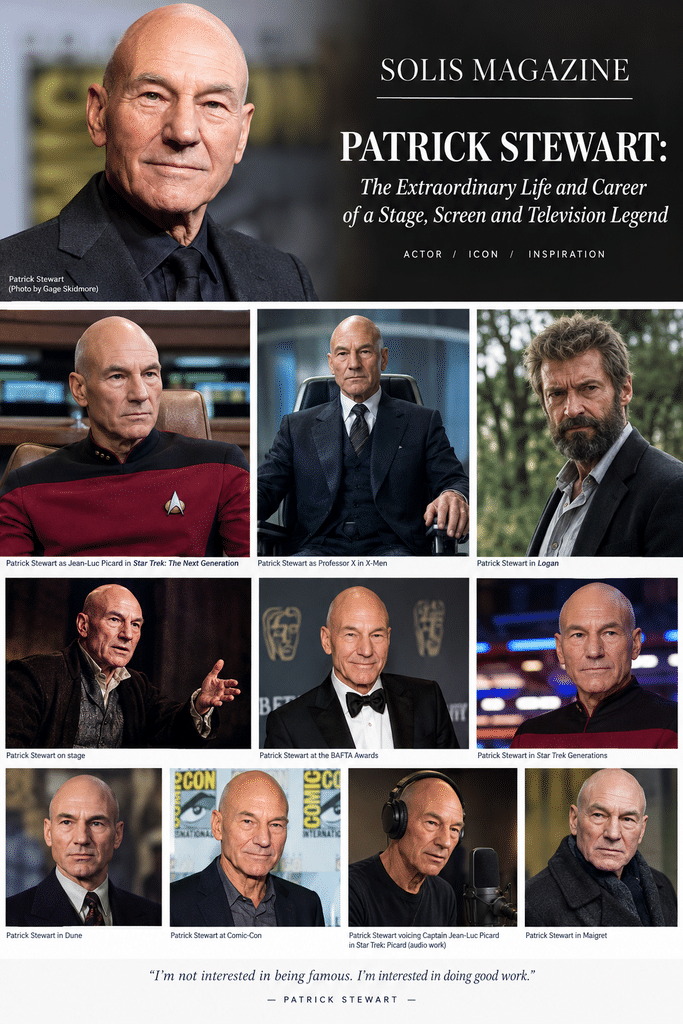
Image Credits
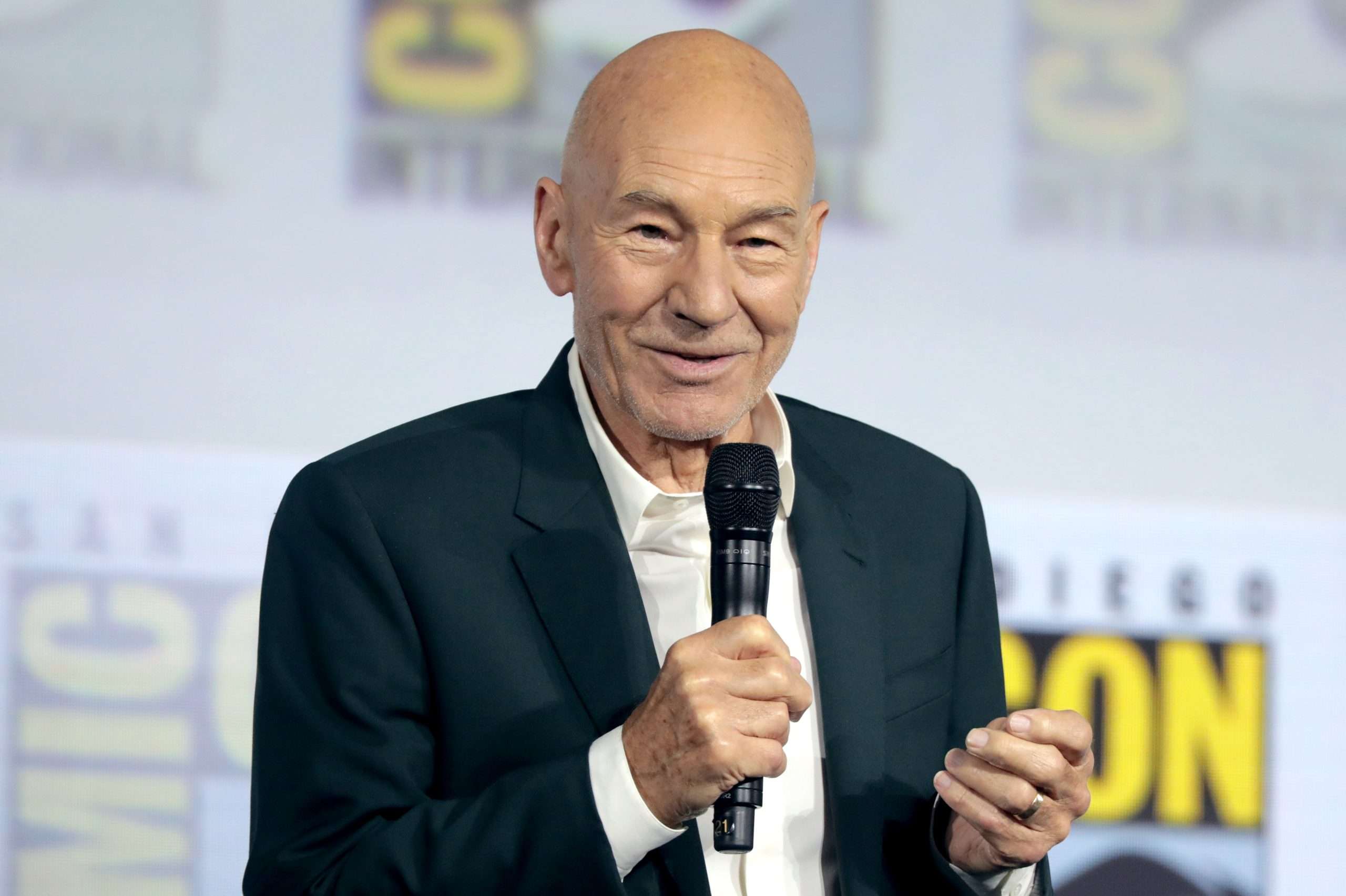
Featured photograph: Gage Skidmore, Patrick Stewart at the 2019 San Diego Comic-Con International; Creative Commons Attribution-ShareAlike 2.0. View source and license.
Editorial Sources and Further Reading
Royal Shakespeare Company tribute
Variety report on final screen appearance