
Dolly Parton the Queen of Country (1946-2026)

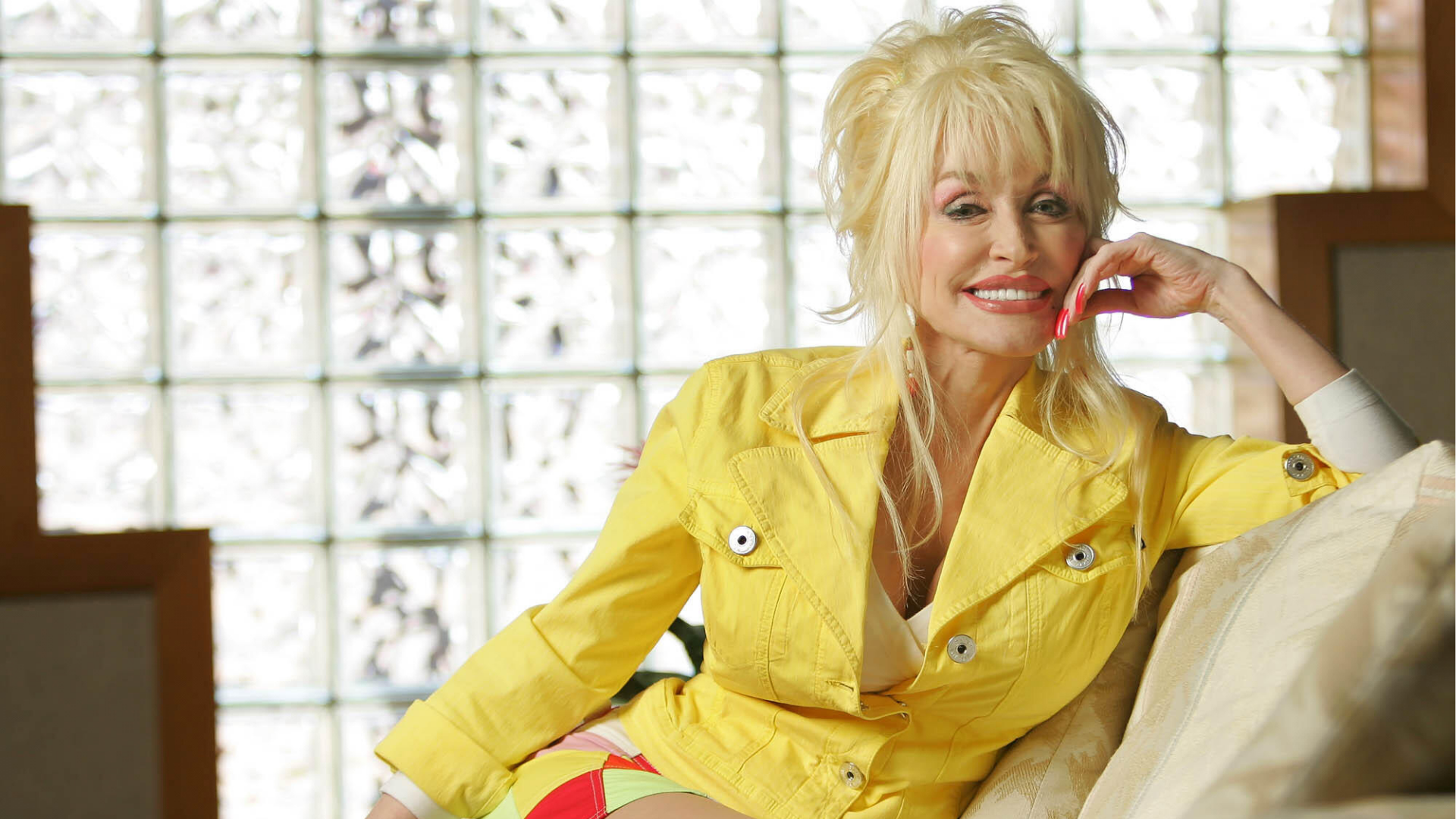
Dolly Parton — the Queen of Country, songwriter of more than 3,000 songs, movie star, businesswoman, and humanitarian — died Tuesday, August 25th, 2026 in Nashville. She was 80. According to a family statement, Parton died “peacefully,” with a small private service planned for close family. Her publicist later said she died “after bravely facing a brief battle with cancer” at Vanderbilt-Ingram Cancer Center. This is a full career retrospective — from the one-room cabin to 9 to 5 to Dollywood to her final year.
Humble Beginnings: 1946-1964
Born January 19, 1946 in a one-room cabin in Sevier County, Tennessee, Dolly Rebecca Parton was the fourth of 12 children. She described the family as “dirt poor” and her father did not know how to read. Music came through her mother Avie Lee, whose father was a preacher who played piano and guitar. “My people were the ones that sang at funerals and weddings and shindigs and anything around locally,” Parton once recounted.
An uncle gave her her first guitar. She learned to play at 7 and started writing immediately. “Mama was fascinated with how I could rhyme and write songs about stuff I’d never lived,” she said, “but I’d hear them talk”. She wrote her first song at age six, “Little Tiny Tasseltop,” about a corncob doll. On the day after high school graduation in 1964, she moved to Nashville. On her first day in Nashville she met Carl Thomas Dean outside a laundromat. “I was surprised and delighted that while he talked to me, he looked at my face (a rare thing for me),” she later wrote. They married in 1966 and were together for 59 years until his death in March 2025.
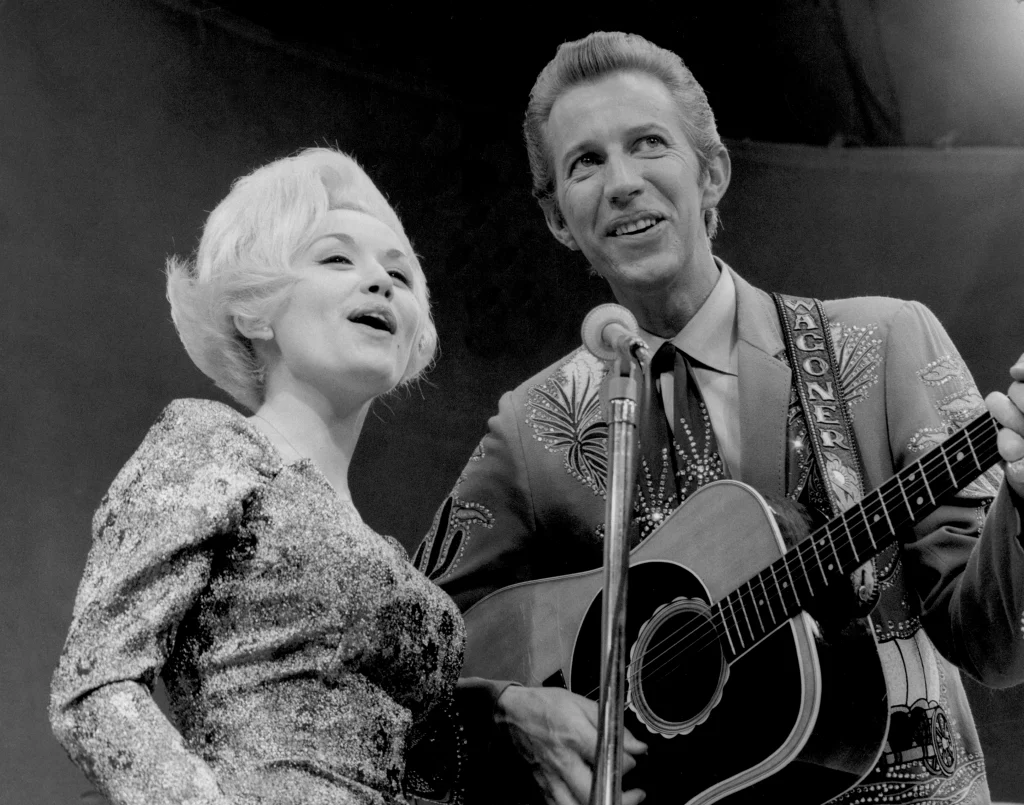
The Monument and Porter Wagoner Years: 1965-1974
Parton signed her first deal with Monument Records in 1965. The breakthrough came in 1967 when she joined “The Porter Wagoner Show,” a nationally syndicated TV variety show. Wagoner became her duet partner, producer, and mentor. Her first No. 1 as a solo artist was “Joshua” in 1971, the same year “Coat of Many Colors,” the autobiographical ode to her mother who stitched together garments in their rural Tennessee home, reached No. 4. By 1974 she was ready to leave. Wagoner didn’t want to let go. Parton has told the story many times:
“So I went home and wrote that song, took it back the next morning, and said, ‘Sit down, I need you to hear something.’ So I sang it, and he was crying”
That song was “I Will Always Love You.” It was a business decision as much as an artistic one. At age 20 she had started a publishing company with her uncle Bill Owens, maintaining controlling interest in her music to provide for her family. That control is legendary. In 1974 she turned down Elvis Presley covering “I Will Always Love You” because Colonel Tom Parker demanded half the publishing. “This is my publishing company, and obviously this is going to be one of my most important copyrights, and I can’t give you half the publishing,” she said. “Because that’s stuff that I’m leaving for my family”.
When Whitney Houston recorded it for The Bodyguard in 1992, Parton netted an estimated $10 million in royalties.
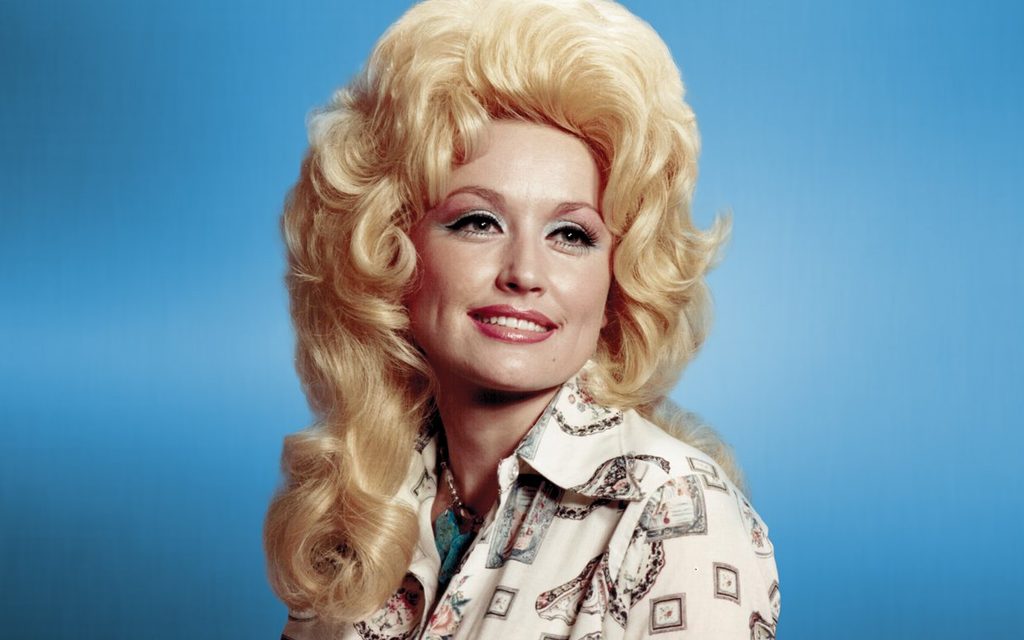
Solo Superstardom: 1974-1979
Freed from the duet format, Parton released a run of defining albums: Jolene (1974), All I Can Do (1976), New Harvest…First Gathering (1977). She captured the American experience — love, heartbreak, working-class pride — in songs like “Jolene” and “I Will Always Love You”. In total she would release 49 albums and win 11 Grammys, becoming one of the most successful country-to-pop crossover artists ever with hits like “Islands in the Stream” with Kenny Rogers.
From Song to Screen: The Acting Career
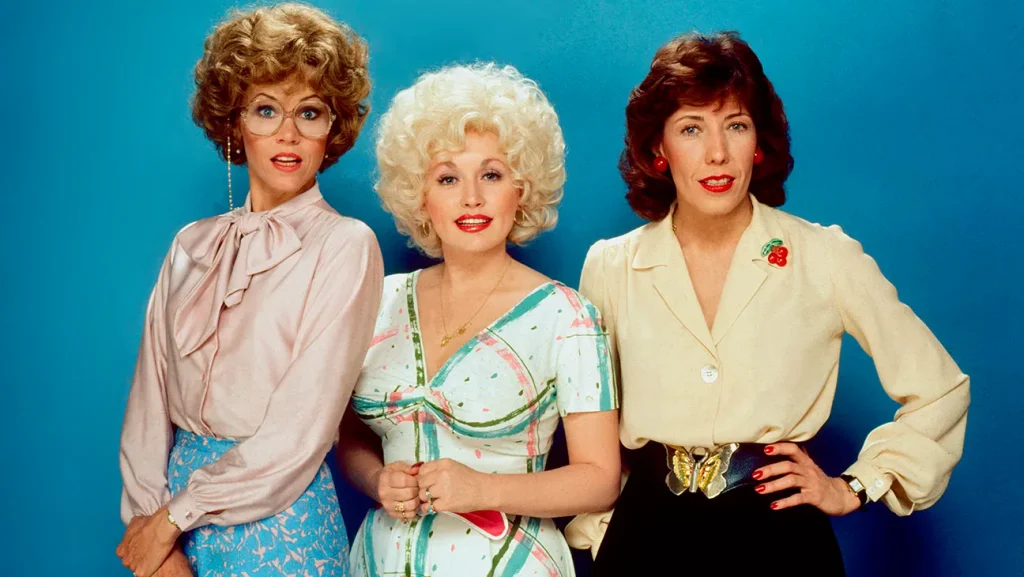
With her southern twang, witty charm and stunning looks, Parton was a natural in front of the camera. She tried a variety show “Dolly!” that lasted one season, then Hollywood called. 9 to 5 (1980): Her feature debut alongside Jane Fonda and Lily Tomlin as three secretaries plotting revenge on their chauvinist boss. Fonda recalled hearing “Two Doors Down” on the radio and thinking “Oh my lord. Dolly, Lily and Jane…”.
Parton agreed on condition she could write the theme. Strumming her acrylic nails for percussion, she wrote “9 to 5,” which became an anthem for the women’s liberation movement and workplace rights. It earned her an Oscar nomination for Best Original Song and a Grammy. The Best Little Whorehouse in Texas (1982): Opposite Burt Reynolds, playing Miss Mona. Golden Globe nomination for Best Actress in a Musical or Comedy.
Rhinestone (1984): With Sylvester Stallone. A commercial flop, but it produced “Tennessee Homesick Blues.”
Steel Magnolias (1989): As Truvy Jones, the beauty parlor owner and “glamour technician” — a thinly veiled version of herself — alongside Sally Field, Shirley MacLaine, Daryl Hannah and Julia Roberts. The film introduced her to a new generation, including many in the LGBTQ+ community, and became a beloved classic about a strong-willed clan of Southern women.
Later work: She continued with TV movies, voice work, and producing. In 2005 her song “Travelin’ Thru” for Transamerica, about a trans woman mending family ties, earned her a second Oscar nomination. Her public stance on acceptance was consistent: “I’m so outspoken as far as just being accepting of people in general… I do not believe that we should criticize and judge other people, I think we should be accepting and loving”.
She stayed famously private on partisan politics, saying she lived feminism in practice rather than theory: “I’ve lived it”.
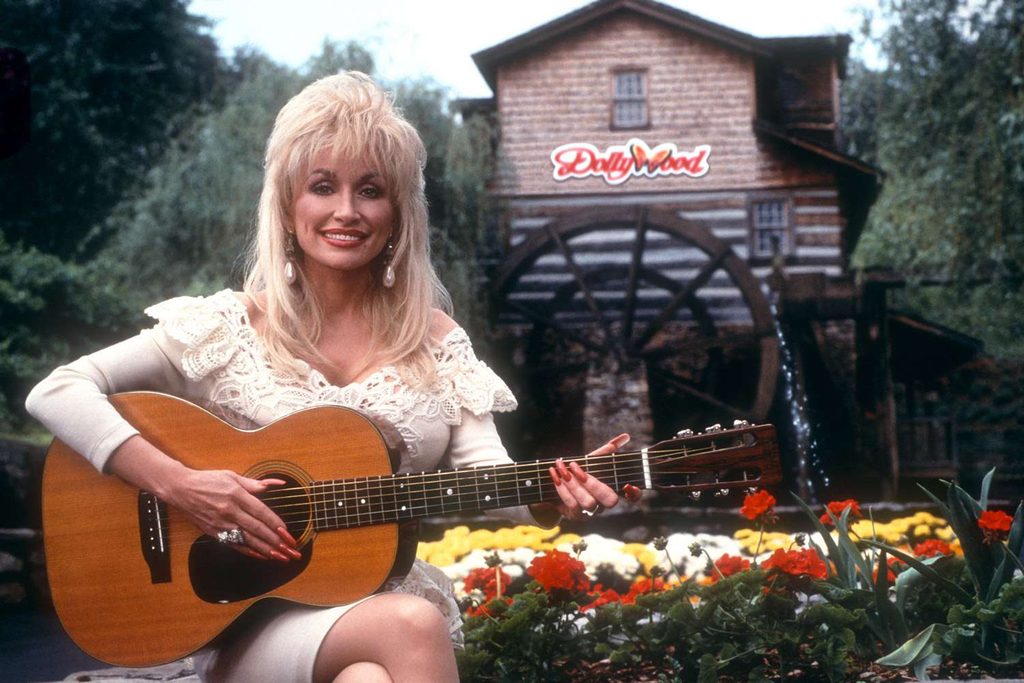
The Empire: Dollywood, Books, and Business
In 1986 she bought a theme park in Pigeon Forge and renamed it Dollywood. It became Sevier County’s largest employer, credited with creating more than 23,000 jobs and generating around $1.8 billion annually. She also wrote bestselling memoirs including Dolly: My Life and Other Unfinished Business, Behind the Seams, and the novel Run Rose Run with James Patterson, plus children’s books like Coat of Many Colors and the Billy the Kid series. Honors accumulated: Country Music Hall of Fame in 1999, Grammy Lifetime Achievement Award in 2011, and after initially saying she didn’t feel like a rock star, Rock & Roll Hall of Fame induction in 2022 followed by her Rockstar album duetting with Paul McCartney and Ringo Starr.
A Legacy of Giving
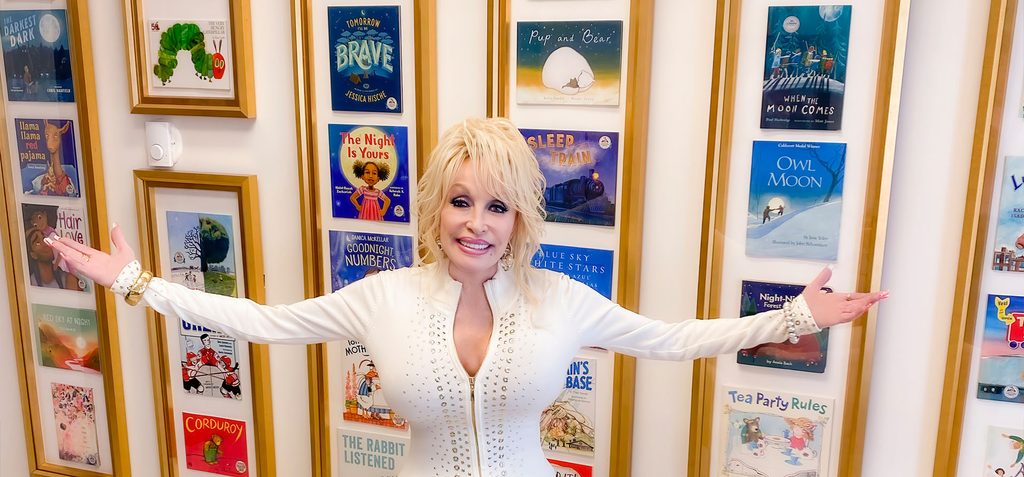
Two years after Dollywood opened, she launched the Dollywood Foundation to lower dropout rates in her home county. That grew into the Buddy Program — $500 to every 7th and 8th grader if they graduated — and then into the Imagination Library in 1995. The Library, a tribute to her father — “He was the smartest man I have ever known but I know in my heart his inability to read probably kept him from fulfilling all of his dreams” — has gifted more than 300 million books to children around the world.
She mobilized after natural disasters in Tennessee, and during Covid-19 donated $1 million to coronavirus research at Vanderbilt, helping fund the Moderna vaccine. “I felt so proud to have been part of that little seed money that hopefully will grow into something great and help to heal this world”.
The Final Years: Loss, Health Challenges, and Farewell
Parton kept her private life private, but spoke openly about her marriage: “The reason it’s lasted is because we’re not in each other’s faces all the time… He’s proud of me, and he’s not jealous. We’re just good together”. Carl Dean died in March 2025 at 82. She honored him with the song “If You Hadn’t Been There” — “If you hadn’t been there, where would I be? Without your trust, love and belief”.
After his death, her own health declined. She canceled her planned Las Vegas residency in late 2025, citing health concerns. Earlier in 2026 she said: “Back when my husband Carl was very sick — that was for a long time — and then when he passed, I didn’t take care of myself… So I let a lot of things go that I should have been taking care of”. She made a surprise public appearance in March 2026 to give a health update, saying she needed to “build myself back up,” but largely stayed out of public view through the summer.
On August 25, 2026, her family announced she had died peacefully. Dollywood announced it would close on Tuesday out of respect — a closure initially on its calendar, but the park said it would reopen Wednesday, August 26th, “as Dolly wanted, reminding everyone with her signature sparkle — ‘the show must go on.'”
She is survived by her brothers and sisters, her extended family, and by a catalog that will, as she always promised, always love us back.