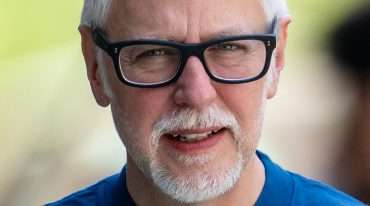

ROBERT PATTINSON: THE NEW JAMES BOND — BRITISH ACTOR TAKES OVER THE WORLD’S MOST FAMOUS SECRET AGENT

The name is Pattinson. Robert Pattinson.
After years of speculation, countless rumors, and an international search for the next actor capable of carrying one of cinema’s most legendary roles, British actor Robert Pattinson has officially been named the new James Bond. Amazon MGM Studios made the announcement on November 16, 2026, confirming that the actor best known for The Twilight Saga, The Batman, and an increasingly adventurous collection of independent films will inherit the famous role of Agent 007 from Daniel Craig.
It is a casting announcement that immediately changes the conversation surrounding the future of the James Bond franchise. Pattinson is not simply stepping into another film role. He is taking on a character whose cinematic history stretches back more than six decades, whose image has become part of international popular culture, and whose name is recognized by audiences across generations.
For Pattinson, the appointment represents the latest extraordinary chapter in a career defined by reinvention. For Bond fans, it signals the beginning of a new era, one that will attempt to honor the franchise’s celebrated past while introducing a different interpretation of the British secret agent.
The next Bond film will be directed by acclaimed filmmaker Denis Villeneuve, whose credits include Arrival, Blade Runner 2049, and the Dune films. The screenplay is being written by Steven Knight, the creator of Peaky Blinders. Producers Amy Pascal and David Heyman will oversee the production, with Tanya Lapointe serving as executive producer.
With this creative team assembled and Pattinson officially wearing the 007 title, the next chapter of James Bond is beginning to take shape.
THE ANNOUNCEMENT THAT ENDED YEARS OF SPECULATION
The search for Daniel Craig’s successor became one of Hollywood’s most discussed casting stories. Ever since Craig completed his five-film run with No Time to Die in 2021, fans and entertainment reporters have debated who would become the next cinematic James Bond.
Names including Idris Elba, Henry Cavill, Aaron Taylor-Johnson, Tom Hardy, Callum Turner, and other British actors were repeatedly mentioned in speculation. The role has traditionally attracted enormous attention because the actor selected must satisfy several competing expectations. He must convincingly portray a sophisticated international intelligence officer, possess the physical presence required for action sequences, and bring enough personality to make the character compelling across multiple films.
Pattinson emerged as the successful choice, despite not being the name many observers expected to lead the final announcement.
Amazon MGM Studios described the casting as a defining moment for the franchise. Director Denis Villeneuve also expressed enthusiasm, praising Pattinson’s qualities and saying that he brings a new spirit to the legendary character.
Pattinson responded by describing the opportunity as the honour of a lifetime. He expressed gratitude to the director, producers, and studio, adding that the opportunity to play Bond was a dream come true.
The announcement brings an end to one of the longest periods of uncertainty in the franchise’s history. It also introduces an actor whose career has followed a particularly interesting path, from teenage fantasy films to acclaimed independent cinema and major superhero productions.
FROM CEDRIC DIGGORY TO HOLLYWOOD STAR
Robert Pattinson was born on May 13, 1986, in London, England. Before becoming one of the most recognizable actors of his generation, he was a young performer developing his craft through theater and early screen appearances.
His international breakthrough arrived in 2005 when he appeared as Cedric Diggory in Harry Potter and the Goblet of Fire. Although his role was relatively brief, Cedric became an important character in the story, and Pattinson made a memorable impression on audiences.
The film introduced him to a worldwide audience and placed him within one of the most successful entertainment franchises of the era. It also provided an early opportunity to work in a major studio production alongside established performers.
At the time, few could have predicted the extraordinary career that would follow. Yet Pattinson was already demonstrating the screen presence and understated confidence that would later become defining characteristics of his performances.
His next major career transformation would make him an international superstar.
THE TWILIGHT PHENOMENON
In 2008, Pattinson was cast as Edward Cullen in Twilight, the film adaptation of Stephenie Meyer’s bestselling novel. The story of a young woman who falls in love with a mysterious vampire became a global entertainment phenomenon.
Starring opposite Kristen Stewart, Pattinson became one of the defining faces of the franchise. The popularity of the films transformed him into an international celebrity, attracting a massive fan following and making him a familiar presence on magazine covers, entertainment programs, and red carpets around the world.
The series continued with The Twilight Saga: New Moon, Eclipse, Breaking Dawn – Part 1, and Breaking Dawn – Part 2. Together, the films became a major commercial success and established Pattinson as a leading figure in contemporary popular culture.
However, the enormous popularity of Edward Cullen also created a professional challenge. Actors who become closely associated with a successful franchise can find themselves repeatedly offered similar roles. Pattinson appeared determined to avoid being defined by a single character.
Rather than simply following the familiar Hollywood path toward more blockbuster romances, he began choosing unusual and demanding projects that allowed him to demonstrate a different range.
REINVENTING HIMSELF THROUGH INDEPENDENT CINEMA
Following the conclusion of Twilight, Pattinson made a deliberate effort to challenge audience expectations.
He worked with filmmakers interested in complex characters, unconventional stories, and challenging dramatic material. His performances in Cosmopolis, The Rover, Maps to the Stars, and The Lost City of Z demonstrated a willingness to move away from the mainstream image that had made him famous.
One of the most important performances of this period came in Good Time, the 2017 crime thriller directed by Josh and Benny Safdie. Pattinson played Connie Nikas, a desperate man attempting to rescue his brother after a robbery goes wrong.
The film received considerable critical attention, and Pattinson’s performance was widely praised for its intensity. It demonstrated that he could carry a demanding film through an unpredictable and emotionally exhausting character.
Another major achievement arrived with The Lighthouse, Robert Eggers’ atmospheric psychological drama. Starring opposite Willem Dafoe, Pattinson delivered a performance that explored isolation, obsession, and psychological deterioration.
These films helped change the way audiences and industry professionals viewed him. He was no longer simply the young actor from Twilight. He had established himself as a performer willing to take risks and work with some of the most interesting filmmakers in contemporary cinema.
TENET AND THE RETURN TO BIG-BUDGET FILMMAKING
In 2020, Pattinson appeared in Christopher Nolan’s Tenet, a science-fiction action thriller involving time inversion, international espionage, and an elaborate mystery.
Playing Neil, Pattinson brought humor, intelligence, and an understated charm to a complicated story. His performance was an important reminder that his abilities extended beyond independent drama and romantic fantasy.
Working with Nolan also placed him in a major international production alongside John David Washington, Elizabeth Debicki, Kenneth Branagh, and Michael Caine.
The film further strengthened Pattinson’s relationship with large-scale filmmaking and demonstrated that he could operate comfortably within ambitious productions requiring complex action sequences and demanding storytelling.
It was another step toward the role that would eventually define the next stage of his career.
BECOMING BATMAN
In 2022, Pattinson took on one of the most recognizable characters in popular culture when he became Bruce Wayne and Batman in Matt Reeves’ The Batman.
The casting initially generated debate. Some audiences questioned whether the actor known for Edward Cullen could convincingly portray Gotham City’s dark and emotionally troubled vigilante.
Those doubts became part of the conversation surrounding the film’s release. Pattinson ultimately delivered a darker, more introspective interpretation of Batman, presenting Bruce Wayne as an isolated young man still learning what it means to become a symbol of justice.
Unlike some previous cinematic interpretations, The Batman concentrated heavily on detective work, corruption, psychological conflict, and the criminal underworld of Gotham City.
Pattinson’s performance emphasized the emotional damage behind the mask. His Bruce Wayne was not yet the confident billionaire philanthropist audiences might traditionally expect. He was a man consumed by grief and anger, struggling to understand how his actions could create meaningful change.
The film became a major commercial and critical success, introducing a new interpretation of the character and establishing Pattinson as a leading figure in modern franchise filmmaking.
His experience as Batman now creates an especially interesting connection to his appointment as James Bond. Both characters are internationally recognized British fictional icons, but they occupy very different worlds. One is a masked vigilante operating outside the law; the other is a government intelligence officer working within a secretive international organization.
Pattinson has demonstrated that he can approach established characters without simply repeating the performances that came before him.
WHY ROBERT PATTINSON COULD BE A DIFFERENT KIND OF JAMES BOND
One of the most interesting aspects of Pattinson’s casting is the possibility that he may bring a different emotional dimension to 007.
James Bond has traditionally been portrayed as sophisticated, confident, physically capable, and exceptionally composed. The character is famous for his tailored suits, quick wit, dangerous assignments, and ability to navigate the most exclusive environments in the world.
Yet the different actors who have played Bond have never approached the role in exactly the same way.
Sean Connery introduced a confident and commanding interpretation. Roger Moore brought humor and a lighter sense of adventure. Timothy Dalton emphasized a more serious and emotionally restrained Bond. Pierce Brosnan combined traditional sophistication with modern action spectacle. Daniel Craig delivered one of the most physically demanding and psychologically complex interpretations in the franchise’s history.
Pattinson has an opportunity to create his own identity within that tradition.
His work in Good Time and The Lighthouse demonstrated his ability to portray characters who are unpredictable and psychologically complicated. His performances in Tenet and The Batman showed that he can also operate within major action productions.
A successful Bond performance will require a balance of these qualities. The character must be dangerous without becoming one-dimensional, charming without appearing artificial, and emotionally engaging without losing the mystery that has always surrounded 007.
Pattinson’s greatest advantage may be his unpredictability. Audiences have seen him move from fantasy romance to psychological drama, from science-fiction spectacle to superhero filmmaking. He has repeatedly demonstrated that he does not want to remain in one category.
That ability to reinvent himself could become an important asset in the Bond franchise.
DENIS VILLENEUVE: THE DIRECTOR BEHIND THE NEW 007
The appointment of Denis Villeneuve is almost as significant as the casting of Pattinson.
Villeneuve has developed a reputation as one of the most visually ambitious filmmakers working in contemporary cinema. His films frequently combine extraordinary imagery with complex characters and carefully constructed atmosphere.
His credits include Prisoners, Sicario, Arrival, Blade Runner 2049, and the Dune films.
His approach to filmmaking often emphasizes tension, scale, visual storytelling, and the psychological experiences of his characters. These qualities could be particularly effective in a James Bond film.
The franchise has always relied on memorable locations, elaborate action sequences, exotic settings, and sophisticated production design. Villeneuve has demonstrated an ability to create cinematic worlds that feel enormous while remaining grounded in the experiences of individual characters.
His involvement suggests that the next Bond film may place considerable emphasis on atmosphere and visual storytelling.
The director has also worked with Pattinson on Dune: Part Three, giving the two an existing professional relationship. That familiarity could help establish a productive creative partnership as they approach one of cinema’s most demanding leading roles.
STEVEN KNIGHT WRITES THE NEXT BOND ADVENTURE
The screenplay is being written by Steven Knight, another major creative name attached to the project.
Knight is best known as the creator of Peaky Blinders, the British crime drama that became an international success. His other work includes Locke, Eastern Promises, and numerous television and film projects.
His experience writing stories involving crime, power, loyalty, betrayal, and complicated relationships could provide an interesting foundation for a modern Bond adventure.
The screenplay will be particularly important because the franchise is entering a new production era. It must introduce Pattinson as 007 while establishing the tone and direction of the next series of films.
Following Daniel Craig’s emotionally definitive conclusion in No Time to Die, the filmmakers face the challenge of bringing Bond back without simply repeating the previous era.
The new story will need to establish its own identity, its own supporting characters, and a compelling reason for audiences to return to the cinema.
THE END OF THE DANIEL CRAIG ERA
Daniel Craig’s departure from the franchise created a major transition for James Bond.
Craig first appeared as 007 in Casino Royale in 2006. His interpretation was initially controversial because he looked different from the traditional image of Bond. He was physically imposing, blonde, and often more emotionally vulnerable than previous versions.
Yet his five-film run became one of the most influential periods in the character’s cinematic history.
Casino Royale introduced a tougher and more grounded Bond. Quantum of Solace continued that interpretation, while Skyfall explored the character’s history and relationship with the intelligence service. Spectre brought together elements of the previous films, and No Time to Die delivered an unusually emotional conclusion.
Craig’s Bond was allowed to change over time. He experienced loss, developed relationships, confronted personal trauma, and ultimately made a sacrifice that gave his final film a sense of closure.
Replacing him was never going to be a simple casting decision.
Pattinson will need to acknowledge the importance of Craig’s contribution while creating a Bond who belongs to a new generation.
A NEW ERA UNDER AMAZON MGM STUDIOS
The casting also represents a major moment for the business future of the franchise.
Amazon MGM Studios now has creative control of the James Bond film series following the changes involving longtime rights holders Michael G. Wilson and Barbara Broccoli.
For decades, the Bond films were closely associated with the Broccoli family and EON Productions. Their involvement helped establish a consistent identity for the franchise while allowing each new actor to bring something different to the role.
The new arrangement creates a different corporate environment.
Amazon has the resources and international distribution capabilities to support a major cinematic franchise, but it must also understand that James Bond is not simply another entertainment property. The character carries an enormous cultural legacy and a dedicated audience that cares deeply about the direction of the films.
The first Pattinson film will therefore be an important test of the studio’s ability to balance commercial ambitions with the traditions that have made Bond successful.
The franchise has generated more than $7 billion in worldwide theatrical ticket sales across its history, making it one of the most valuable properties in film entertainment.
The responsibility of protecting that legacy now rests with a new creative and production team.
WHAT CAN AUDIENCES EXPECT FROM THE NEW JAMES BOND?
At this stage, the full story of Pattinson’s first Bond adventure has not been revealed. The film remains untitled, and the studio has not announced a release date or detailed plot.
However, the creative team offers some clues about the direction audiences might expect.
Villeneuve’s involvement suggests a carefully constructed cinematic experience, while Knight’s writing background points toward a story that could emphasize intrigue, power, and complicated characters.
Pattinson may also bring a different physical and emotional presence to the character. His interpretation could explore a Bond who is still establishing his reputation within the intelligence service, although no official plot details have confirmed that approach.
The filmmakers will also have to decide how much of the traditional Bond formula to preserve.
Audiences expect certain elements: the Aston Martin, sophisticated clothing, international locations, memorable villains, dangerous assignments, and the familiar 007 identity. But the franchise has survived because it has adapted to changing audiences and different cinematic eras.
The challenge will be to preserve what makes Bond recognizable while finding new ways to surprise viewers.
THE LEGACY OF JAMES BOND
Since Sean Connery first portrayed James Bond in Dr. No in 1962, the character has become one of the most enduring figures in film history.
Connery established the cinematic identity of 007. George Lazenby offered a different interpretation in On Her Majesty’s Secret Service. Roger Moore brought humor and an unmistakable sense of style. Timothy Dalton introduced a tougher approach, while Pierce Brosnan helped bring the franchise into the modern blockbuster era.
Daniel Craig then redefined the character for a generation of audiences.
Each actor inherited a role that was already famous, but each also contributed something unique.
Pattinson now joins that extraordinary group. He becomes the seventh actor to portray James Bond in the official EON film series, taking on a character whose cultural influence extends far beyond the cinema screen.
The role is not simply about wearing a tuxedo or driving an Aston Martin. It is about becoming part of an entertainment legacy that has influenced fashion, music, television, advertising, and popular culture for more than sixty years.
CONCLUSION: THE NAME IS PATTINSON, ROBERT PATTINSON
Robert Pattinson’s appointment as James Bond is a major moment for both the actor and the franchise.
His career has been anything but predictable. From Cedric Diggory in Harry Potter and the Goblet of Fire to the international phenomenon of Twilight, from challenging independent films to Christopher Nolan’s Tenet and Matt Reeves’ The Batman, Pattinson has consistently demonstrated an ability to reinvent himself.
Now he faces perhaps the most recognizable role of his career.
With Denis Villeneuve directing and Steven Knight writing, the next Bond film has assembled an ambitious creative team. The involvement of Amazon MGM Studios also signals a new business chapter for a franchise that has remained remarkably successful across generations.
The expectations will be enormous. Bond fans will want the sophistication, danger, intelligence, and excitement that have always defined 007. At the same time, audiences will be curious to discover what Pattinson can bring to a character previously shaped by some of the most memorable performances in cinema.
The transition from Daniel Craig to Robert Pattinson is more than a change of leading actor. It is the beginning of another chapter in a cinematic institution.
For now, the world knows who will inherit the license to kill.