
Hayden Panettiere’s Life, Career, and the Loss the Industry Didn’t See Coming (1989-2026)

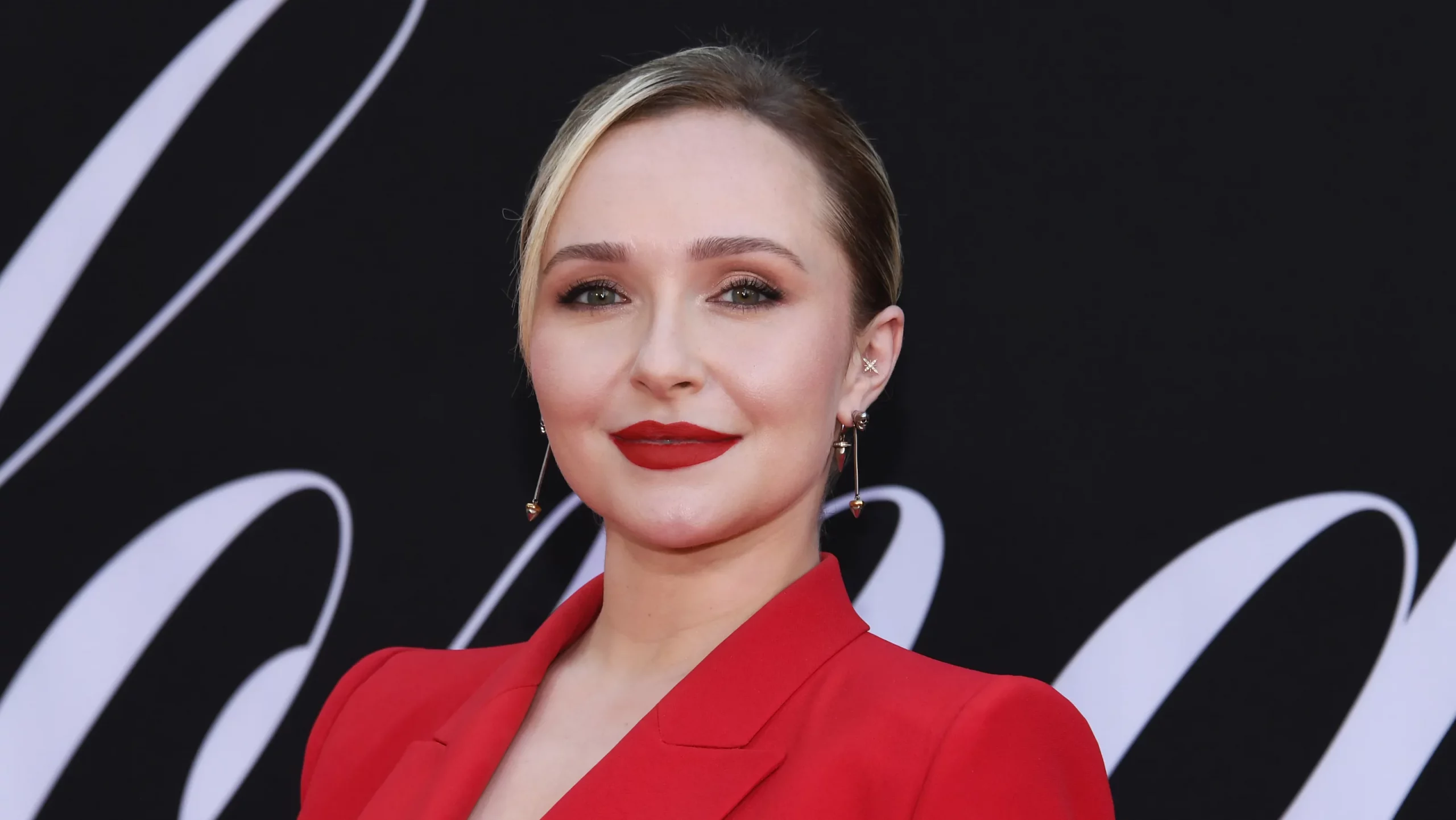
On August 16, 2026, word spread through Hollywood and living rooms across the country with the particular speed reserved for the deaths that feel impossible. Hayden Panettiere — the girl who once told a network of superheroes to “save the cheerleader, save the world,” the honey-voiced country star of a beloved musical drama, the survivor who spent her final years narrating her own recovery in public — was gone at 36. She had spent three decades in front of cameras, starting as a toddler in commercials and ending, by her own account, in the middle of a genuine comeback. The dissonance between where her story seemed to be heading and where it stopped is, in many ways, the story itself.
This is an attempt to hold both halves of that story at once: the working actress who built one of the more unusual filmographies of her generation, and the young woman who spent her thirties publicly wrestling with grief, addiction, and the fallout of growing up famous. Authorities in Greenville, South Carolina, have not yet issued a final, official cause of death as of this writing — the county coroner’s office says toxicology and further studies are still pending — so this piece does not attempt to resolve what remains, officially, unresolved. What follows instead is a fuller accounting of who Hayden Panettiere was on-screen and off, built from the public record she spent years helping to shape herself.
A Child of the Industry
Hayden Lesley Panettiere was born August 21, 1989, in Palisades, New York, into a family that pushed her toward performing almost from the moment she could walk. She was doing television commercials before she had learned to read fluently, and by the time most children are starting elementary school, she already had a soap opera credit — a recurring role on One Life to Live — under her belt. Hollywood has produced no shortage of child performers who burned out, faded, or struggled to be taken seriously as adults; Panettiere’s early career is notable mostly for how quickly it moved past the “cute kid” phase and into substantive work.
By age nine she had a voice role in the animated feature Dinosaur, and a year later she appeared in Remember the Titans, the 2000 football drama built around Denzel Washington’s performance as a coach integrating a Virginia high school team in the early 1970s. Panettiere played Sheryl Yoast, the coach’s young daughter — a small but memorable part in a film that became a modest cultural touchstone, still shown in classrooms decades later. The same year, she had a role in the family adventure film If You Believe, further cementing her as one of the more reliably working child actors of her cohort.
The next several years were a steady accumulation of credits rather than a single breakout: a part in the final season of Ally McBeal, the 2004 comedy-drama Raising Helen opposite Kate Hudson, and Ice Princess in 2005, a Disney figure-skating film that gave her a rare lead role and a taste of being a box-office draw for a young female audience. That same year she appeared in Racing Stripes, a family comedy about a zebra who believes he’s a racehorse — the kind of broad, mid-2000s studio film that doesn’t always age gracefully in memory but that, at the time, kept her name in front of the exact demographic Hollywood wanted her reaching.
What distinguished Panettiere from many of her peers in this stretch was range. She wasn’t confined to one studio’s pipeline or one genre. She moved between Disney family fare, ensemble dramas, and voice work, and by her mid-teens she had already logged more screen time than most actors accumulate in a full career.
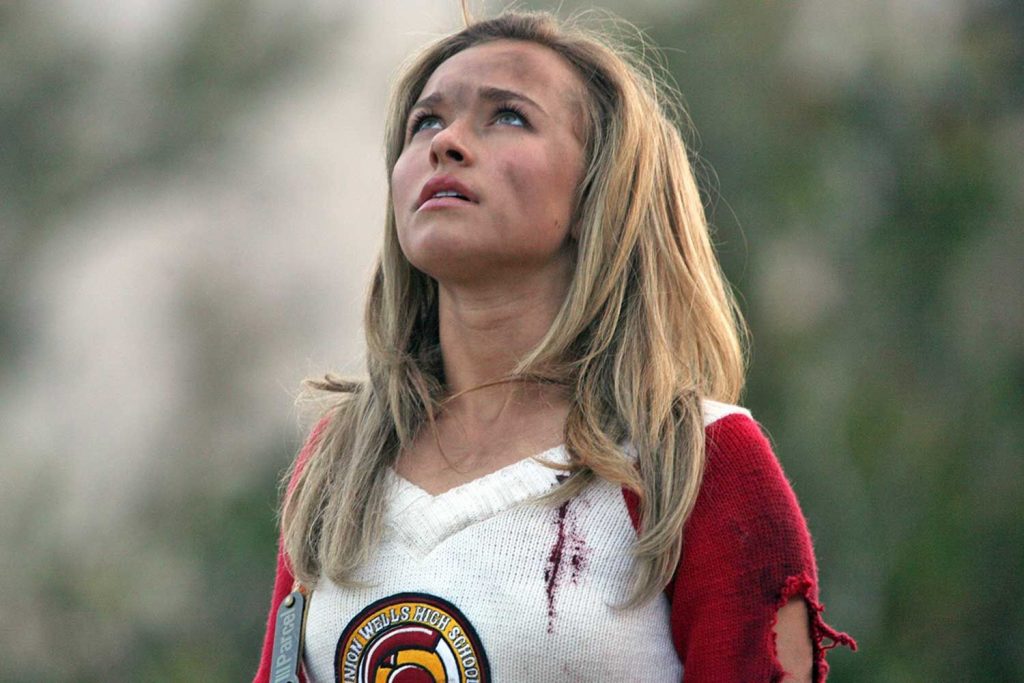
Heroes and the Cheerleader Who Wouldn’t Die
Everything changed in 2006, when NBC premiered Heroes, a serialized drama about ordinary people discovering they had extraordinary abilities. Panettiere, then sixteen, was cast as Claire Bennet, an Indiana cheerleader who discovers she cannot be permanently injured — a power that made her, within the show’s mythology, central to a prophecy involving the fate of the world. The show’s marketing built an entire campaign around her character’s catchphrase, and “save the cheerleader, save the world” briefly became one of the most recognizable lines on television.
Heroes was a genuine phenomenon in its first season, part of a mid-2000s wave of ambitious genre television that helped set the stage for the prestige serialized dramas that would dominate the following decade. Panettiere was, by any measure, one of the breakout stars of the ensemble — young enough to headline a new generation of fans, but experienced enough to hold her own opposite adult co-stars in a show juggling a sprawling cast and increasingly complicated plotting. The role made her a fixture of mid-2000s teen media, magazine covers, and a level of tabloid attention that she would later say arrived faster than she was prepared for.
She stayed with the series through its four-season run, from 2006 to 2010, watching it evolve from a critical and ratings darling into a show that, like many of its era, struggled to sustain its early creative peak across a Writers Guild strike and shifting network expectations. Even as the show’s fortunes cooled, Panettiere’s own profile did not; Claire Bennet had made her one of the more established young actresses of her generation before she had finished being a teenager.
Juliette Barnes and a Golden Globe-Nominated Second Act
Panettiere could easily have spent the years after Heroes coasting on residual name recognition. Instead, in 2012, she took a role that asked considerably more of her as a performer: Juliette Barnes, a manipulative, talented, deeply insecure country music star on ABC’s (later CMT’s) Nashville. The show, created by Callie Khouri, was a music-industry drama built around the rivalry and eventual friendship between Juliette and Connie Britton’s Rayna Jaymes, and it demanded that its cast actually sing — not lip-sync, not approximate, but perform.
Panettiere threw herself into it. She recorded music for the show, performed live, and built a character who moved from tabloid-ready antagonist to one of the more layered figures on the series as it unfolded across six seasons, running from 2012 to 2018. The role earned her two Golden Globe nominations for Best Supporting Actress in a Series, Miniseries, or Television Film — a level of formal industry recognition that had eluded her during even the height of Heroes’ popularity. It was, by most accounts, the finest sustained work of her career: a performance built on real vulnerability rather than the surface-level teen-idol appeal that had defined her adolescence.
Nashville also mattered to Panettiere personally in ways that would only become clear later. The show ran during the years she became a mother, began a long relationship with a professional athlete, and started confronting mental health struggles that she would not discuss publicly until years afterward. In interviews conducted while the show was airing, she was open about the physical demands of singing live and performing her own stunts for some of the show’s more dramatic plotlines, but the fuller picture of what she was carrying during that period only emerged later, in her own words, after the show had ended.
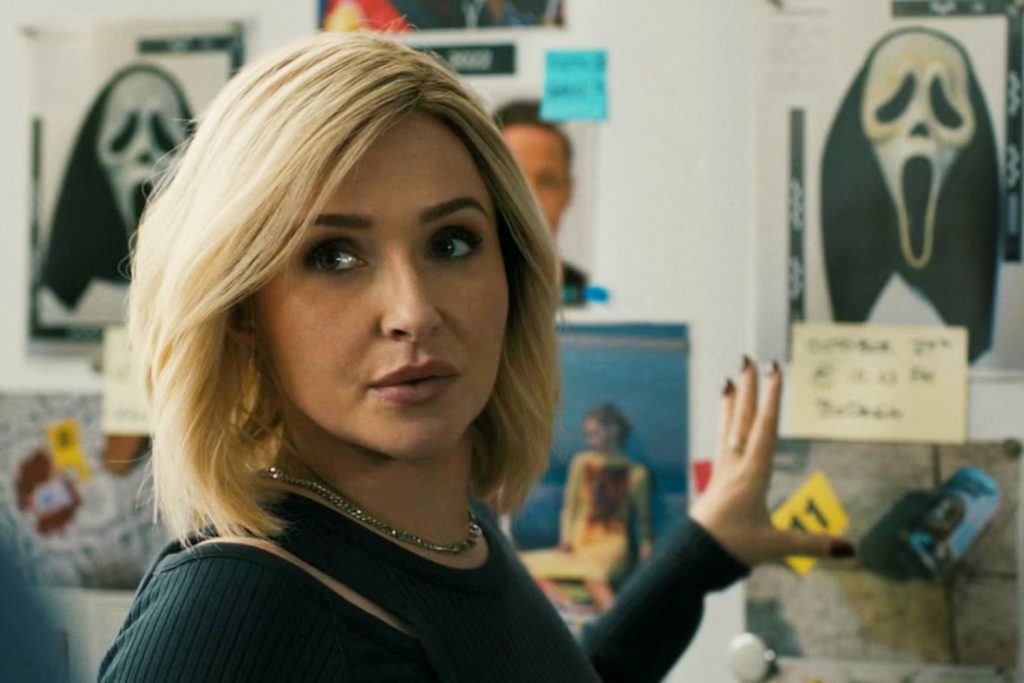
Kirby Reed and a Franchise Return
Alongside her television work, Panettiere maintained a recurring relationship with one of horror’s most durable franchises. She played Kirby Reed in 2011’s Scream 4, a role built around the character’s status as an unusually knowing “final girl” — someone versed enough in horror-movie logic to nearly outthink the killer. The film, arriving eleven years after Scream 3, was a modest hit and a reintroduction of the franchise for a new generation of audiences who had grown up on the original trilogy as older siblings’ VHS tapes rather than theatrical releases.
Kirby Reed’s fate at the end of Scream 4 was deliberately left ambiguous, and more than a decade later, the franchise’s creative team resurrected the character for Scream VI in 2023, folding Panettiere back into the series as it moved its setting to New York and introduced a new ensemble of leads. It was a notable vote of confidence from a franchise not known for bringing back characters whose survival had been left in doubt, and it placed Panettiere back in front of a wide theatrical audience more than two decades after her film debut.
Advocacy Beyond the Screen
Panettiere’s public identity was never confined strictly to acting credits. She became one of the more visible young celebrity advocates for marine conservation, particularly anti-whaling campaigns, participating in on-the-water demonstrations against Japanese whaling fleets and speaking publicly about ocean conservation issues well before that kind of engaged, hands-on celebrity activism was common. She also lent her name and time to advocacy around Washington, D.C. statehood, a comparatively unglamorous cause for a young star to attach herself to, and one that reflected an interest in substantive political engagement rather than the more typical red-carpet-adjacent philanthropy.
Friends and colleagues who spoke publicly after her death repeatedly returned to this thread — that she used her platform for causes she actually believed in, not simply ones that photographed well.
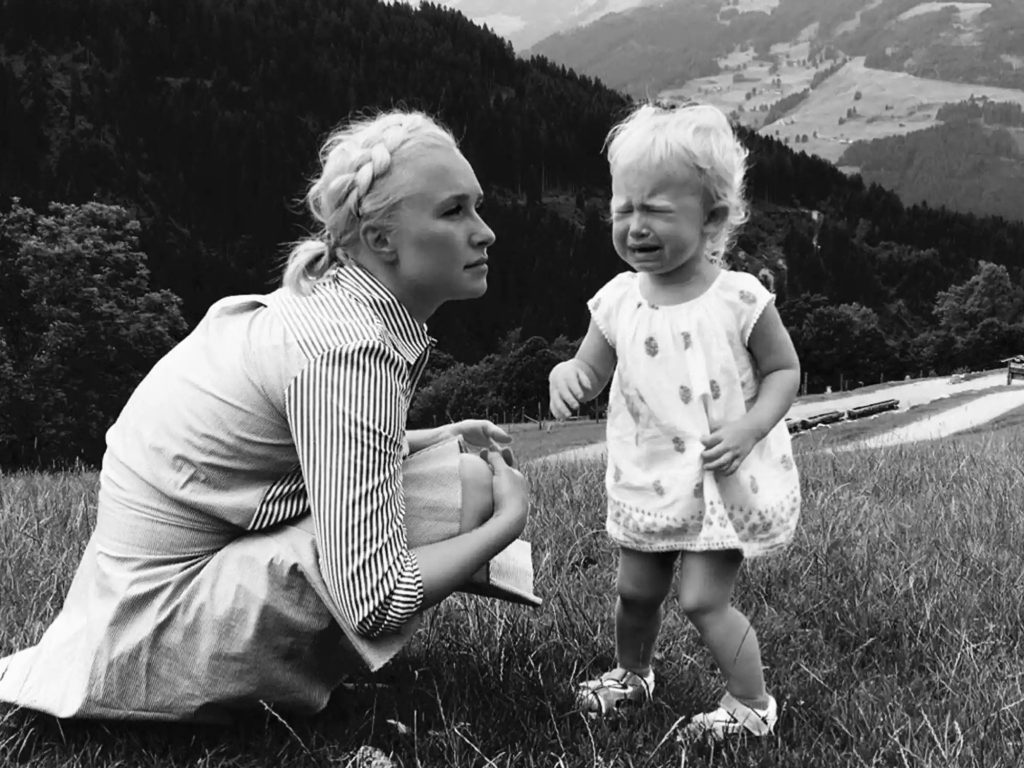
Motherhood, Relationship, and a Long Private Struggle
Panettiere’s relationship with Ukrainian boxing champion Wladimir Klitschko began in 2009 and, with an interruption, continued for close to a decade, ending for good in 2018. The couple had a daughter, Kaya, born in 2014. For years, Panettiere’s relationship with Klitschko and her early motherhood were covered largely in the register of a celebrity human-interest story — the American actress and the heavyweight champion, photographed at his fights, raising a daughter between continents.
The fuller and considerably harder story emerged gradually, and mostly on Panettiere’s own terms. She disclosed in 2022 that she had struggled with postpartum depression following Kaya’s birth, and separately acknowledged a long struggle with alcohol and opioid use. In the years that followed, she spoke about how those struggles had factored into her decision, in 2018, to relinquish primary custody of her daughter — one of the more difficult and unusually candid admissions a young mother in the public eye has made about her own limitations. Rather than concealing that chapter, Panettiere increasingly built her later public appearances around describing it plainly.
That candor deepened further after February 2023, when her younger brother, actor Jansen Panettiere, died at 28. Jansen had built his own career in film, including roles in The Perfect Game and The Martial Arts Kid, and the siblings had grown up in the industry together. Hayden spoke afterward about the devastation of losing him and about carrying guilt in the aftermath — grief compounding onto an already difficult period of recovery.
In 2026, only months before her own death, Panettiere published a memoir, This Is Me: A Reckoning, in which she wrote at length about her childhood in the industry, the toll of early fame, her postpartum depression, her addiction and recovery, and her brother’s death. The book was, by design, an unusually unguarded document from someone who had spent decades being photographed rather than heard — an attempt, it seemed, to control her own narrative after years of having it shaped by tabloids.
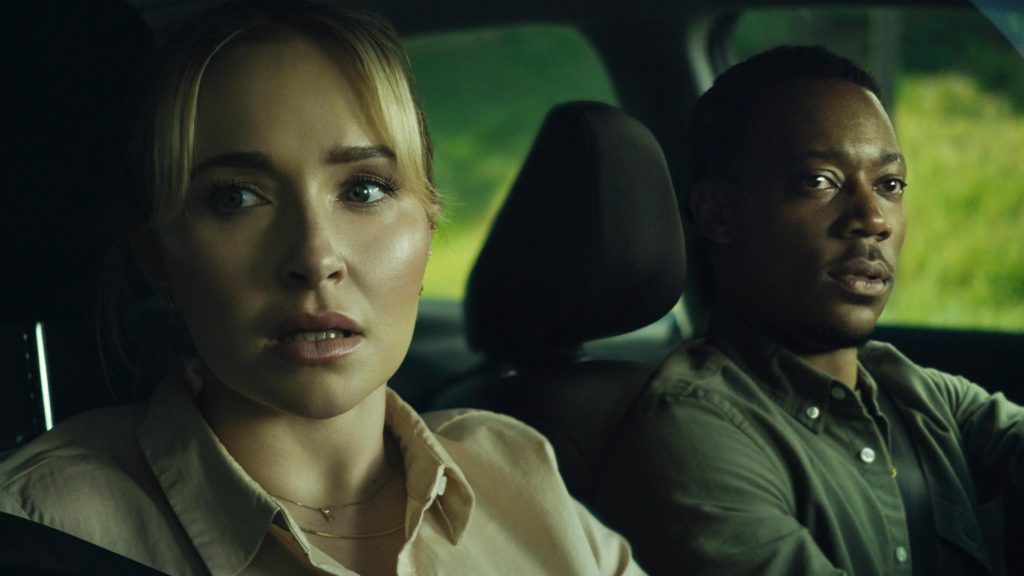
A Comeback, Interrupted
The years immediately preceding her death suggested an actress genuinely finding her footing again after a difficult stretch. She appeared in 2024’s Amber Alert opposite Tyler James Williams, took a role in 2025’s A Breed Apart, and had recently completed work on Sleepwalker, released in 2026, in which she played a character named Sarah. Colleagues who worked with her during this period described someone who seemed to be re-establishing herself professionally at the same time she was speaking more openly than ever about her personal recovery — a return to acting that ran parallel to, rather than in spite of, the public reckoning she’d begun in her memoir.
That parallel arc is what made her death land with such force among people who had followed her story closely. As one longtime friend and former co-star put it publicly in the days afterward, it was hard to understand how this could be real when everything had, by all outward appearance, seemed to be turning around.
The Final Days: What Is Known
According to the Greenville County Coroner’s Office, emergency responders were called to a residence in Greenville, South Carolina, at approximately 1:51 p.m. on Sunday, August 16, 2026, after a report of an unresponsive woman. Panettiere was found in cardiac arrest at a residence where, officials said, she had been temporarily staying. Advanced cardiac life support measures were initiated, but resuscitation efforts were unsuccessful, and she was pronounced deceased at 2:32 p.m. Police said the call to 911 was made by an acquaintance.
An autopsy was completed the following day, Monday, August 17. The coroner’s office stated that no signs of trauma were discovered that would have contributed to her death, and authorities have reported no evidence of foul play. However, the office was explicit that the official cause and manner of death remained pending further investigation and additional studies, including toxicology testing — a process that, in most jurisdictions, can take weeks to complete.
In the days following her death, several outlets reported that emergency dispatch communications had referenced a possible overdose in the initial call that sent responders to the scene. It is worth being precise about what that does and does not establish: an emergency dispatcher’s characterization of a 911 call is not a toxicology result, and it is not the same as an official determination by a coroner or medical examiner. As of this writing, authorities have not confirmed an overdose as the cause of death, and the investigation remains open. A police report released in the days after her death indicated that her on-and-off boyfriend and his brother were the ones who placed the 911 call from the residence.
Panettiere’s final public post, shared on Instagram not long before her death, was a simple, unremarkable message about good times — the kind of ordinary digital footprint that, in retrospect, readers and fans found almost unbearably poignant.
Tributes
Her father, Skip Panettiere, released a statement on behalf of the family describing “profound sadness” at what he called “the tragic passing of our beloved Hayden,” and asked for privacy as the family processed what he described as an unimaginable loss. Her representative, in a separate statement to press, described her as “an incredible light and a force of nature who brought immeasurable love and joy to all who knew her — and to the millions who watched her onscreen.”
Tributes arrived quickly from former co-stars, collaborators from her advocacy work, and fans who had followed her since Heroes. Several who worked alongside her on causes like D.C. statehood and marine conservation specifically noted that her commitment to those issues was genuine and sustained rather than performative — a detail that recurred often enough in the tributes to suggest it reflected something real about how she moved through the parts of her life that had nothing to do with a script.
A Career Worth Reassessing
It’s tempting, in the immediate aftermath of a death like this, to flatten a career into its most recognizable beats: the cheerleader who couldn’t die, the country star, the final girl. But Panettiere’s filmography, read in full, tells a more interesting story about a performer who kept choosing roles that stretched her rather than simply cashing in on name recognition. She sang live, eight seasons of television apart from her film work, across a genre she had no prior training in. She returned to a horror franchise more than a decade after her first appearance in it and made the role feel lived-in rather than nostalgic. And in her final years, she was visibly working to rebuild a career on her own terms, in smaller films, after being candid about exactly what had derailed it.
What makes her death resonate beyond the usual scale of celebrity mourning is the timing: not an actress fading from view, but one who had spent several years publicly, deliberately narrating her own difficult recovery — culminating, just months earlier, in a memoir meant to put the hardest parts of that story fully on the record, in her own words, before anyone else could. She spent her final chapter trying to be understood plainly and completely. The investigation into how that chapter ended is, as of this writing, still open. What is not in question is the body of work — three decades of it, spanning animation, family films, prestige television, and horror — that she leaves behind.